

Former NHL enforcer Georges Laraque recently gained attention with a resurfaced wrestling match, reigniting discussions on his weight, athletic history, and the balance between skill and size.
Laraque’s physical presence, often pegged at 300 pounds, stirred curiosity, drawing comparisons to other notable figures. However, a closer look reveals his weight during his hockey tenure hovered around 260 pounds, later increasing to about 275 pounds upon retirement. Despite weight fluctuations, Laraque’s imposing stature remained unwavering.
Georges St-Pierre is a retired Canadian mixed martial artist and ex-UFC welterweight and middleweight champion. Born on May 19, 1981, in Saint-Isidore, Quebec, Canada, St-Pierre is widely hailed as one of MMA’s greatest icons.
Throughout his career, St-Pierre crafted an impressive legacy, lauded for his exceptional athleticism, technical finesse, and strategic acumen in the octagon. He clinched the UFC welterweight title twice, from April 2006 to January 2008, and again from January 2008 to April 2013. Additionally, he briefly held the UFC middleweight title in November 2017.
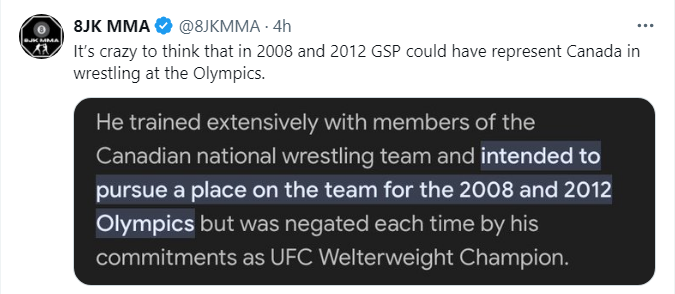
Before his 2017 UFC comeback, GSP took on the challenge of grappling with Laraque, despite the evident size gap. The wrestling session quickly went viral.





Discussions on Laraque’s physique inevitably veered into considerations of his muscle mass and overall strength. Some speculated on his muscle makeup, questioning potential post-retirement muscle gains. However, assertions suggest weight increase may not always correlate with muscle growth, raising intriguing queries about his workout routine and physical fitness.
Amidst the dialogue, Laraque’s demeanor emerged as a focal point, with many commending his humility and grounded nature. Despite his imposing figure and athletic achievements, Laraque’s down-to-earth personality struck a chord with audiences, adding depth to his public persona.
Insights from those with wrestling experience shed light on the importance of skill and technique in combat sports. Elite athletes with formal training, like NCAA wrestlers, earned reverence for their prowess on the mat, highlighting the vast skill gap between amateurs and pros.
