
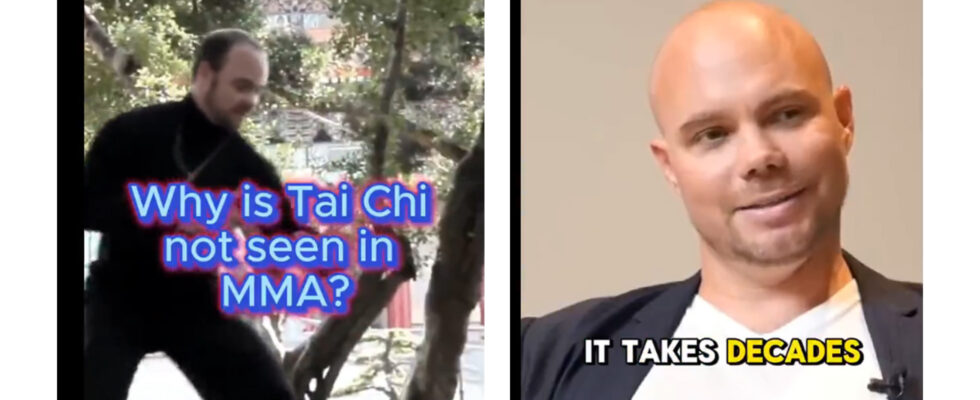
Tai Chi Chuan, with its graceful movements and meditative focus, has long held a place of reverence in the world of martial arts. Its slow, deliberate forms are said to channel inner energy, improve balance, and bring about a state of physical and mental well-being. However, as martial arts evolve in the modern world, many are right to question its practicality in real combat scenarios.
The debate surrounding Tai Chi’s effectiveness in a real life scenario seems endless, with opinions flying across forums, training mats, and social media platforms. One Tai Chi master recently found himself under fire after claiming that it takes so long to master Tai Chi that, by the time someone does, they may be too old to actually use it in combat. For many seasoned martial artists, this was just the beginning of a barrage of criticism.
MMA enthusiasts and stars were quick to challenge this statement, with some pointing out the absurdity of dedicating decades to a technique that can’t be immediately applied in a fight. It’s not just about learning a form—it’s about using it when it matters most. One particularly sharp comment summed up the sentiment, suggesting, “If a technique takes years to get right, maybe it’s just a bad technique.”
Among those who pushed back were UFC alumni Josh Barnett, Lando Vannata and Cody Staman along with BJJ black belt Nathan Mendelsohn.

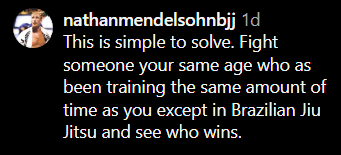

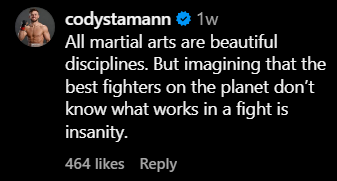
The heart of the issue seems to revolve around the difference between what works on paper and what works in practice. Martial arts, especially in competitive combat sports like MMA, focus on techniques that are tested and proven effective in real, resisting encounters. Tai Chi, for all its elegance and philosophy, doesn’t seem to share the same urgency. And it doesn’t work against an uncooperative uke.
One commenter, reflecting on the practicality of martial arts, offered a blunt yet insightful take: “MMA fighters use what works. If it doesn’t work within a week of trying it, we toss it out.” This no-nonsense approach to martial arts contrasts sharply with the more philosophical teachings of Tai Chi. MMA, boxing, and wrestling are rooted in tangible results. Their fighters learn to adapt, strike, grapple, and win—ideally, without spending decades honing a technique that might fail under pressure.
