
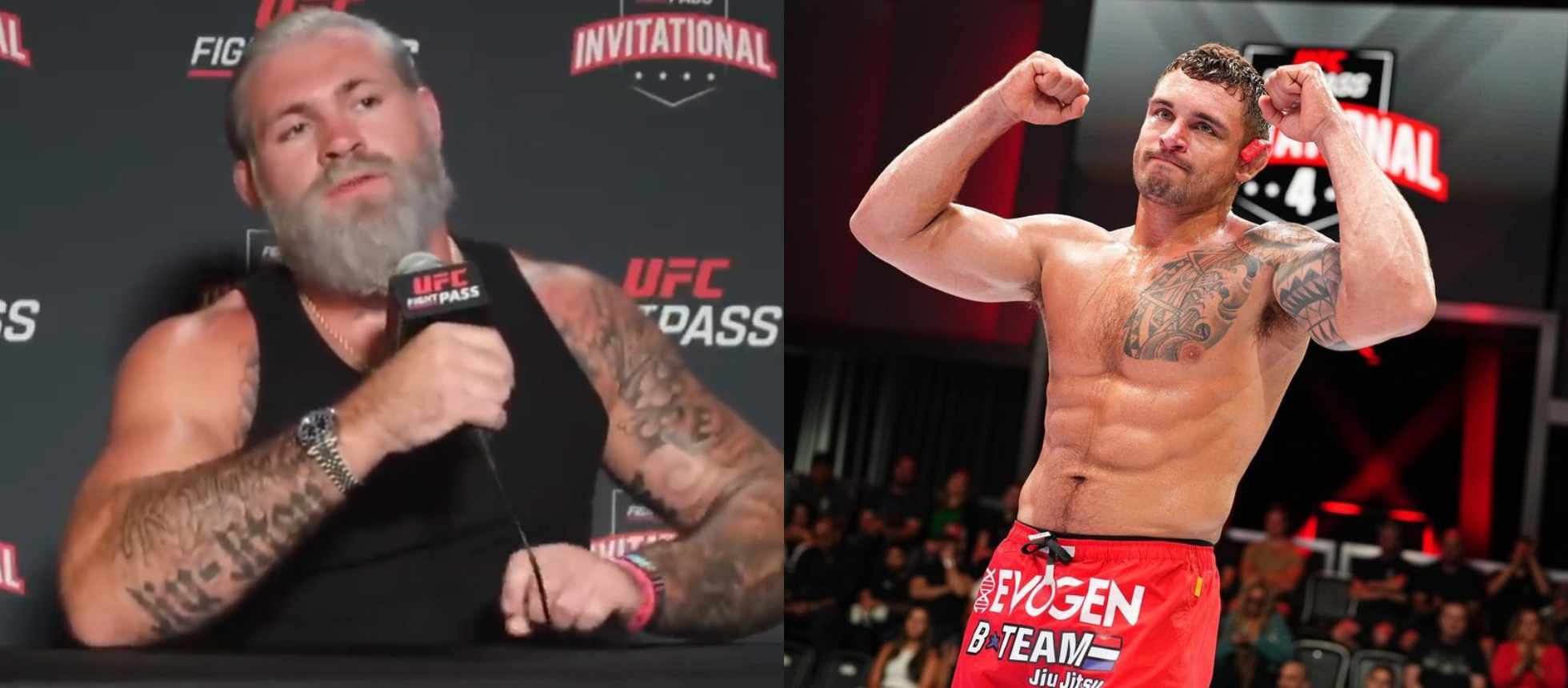
In a revealing interview on Jake Shields’ podcast, grappling superstar Gordon Ryan opened up about the contentious split of his former team and his views on loyalty in jiu-jitsu.
Ryan, widely considered the greatest grappler of all time, expressed frustration with former teammates who left to form the B-Team, particularly Nicky Rodriguez. According to Ryan, he had personally helped develop Rodriguez’s career, getting him sponsors and assisting with negotiations.
“I messaged Nicky Rod, I’m like ‘Hey, you know, I don’t have a problem with you. I helped build your career and I think you should show some loyalty and stay with us,'” Ryan revealed. “If you’re a serious athlete and you want to be the best in the world, you should train under John [Danaher].”
Ryan was particularly upset that Rodriguez never responded to his message. “He’s such a coward, he never even responded to my message,” Ryan said. “He never said thank you, never said anything. I just don’t respect that.”
The grappling champion contrasted this with his own approach, stating he still shows respect to the senior grapplers who helped him early in his career, even as he surpassed them in skill. “My loyalty is always going to be to you guys because you were the guys who helped me get to where I am now,” Ryan explained.
Ryan also criticized the B-Team’s training approach, describing it as “basically just a frat house where they all just kind of have fun.” He contrasted this with his own intense focus on winning and leaving a legacy.
This is especially jarring considering there are family issues at the core of the split, with Gordon Ryan’s own brother separating from the team.
While Ryan’s comments are sure to stir controversy in the grappling community, they offer insight into the personal dynamics behind one of the biggest team splits in jiu-jitsu history.
Garry Tonon Cautions BJJ Students To Be Loyal: Don’t Treat Your Dojo Like a Drive-Thru
The black belt explained that when many students treat the gym like a simple commercial exchange, it negatively impacts the instructors as well. Coaches feel less warmth and connection with their students, making them less inclined to voluntarily spend extra unpaid time helping prepare for competitions, attending events to corner, and going above and beyond in other ways.
He said: “Because if you want to make it like a f**king transaction buddy, oh this can be a transaction real f**king quick. You want to turn it into a transaction? Okay, I’m going to teach my techniques and I’m going to get the f**k out of there. I won’t hang around. I don’t have to be there, why should I have to be there? I taught my techniques I did my job. I coached you. Oh, you want more? You want to know the answer to the question about that technique that you said? Okay, hit me up for a private 500 bucks an hour. Okay, then you can get.”
