
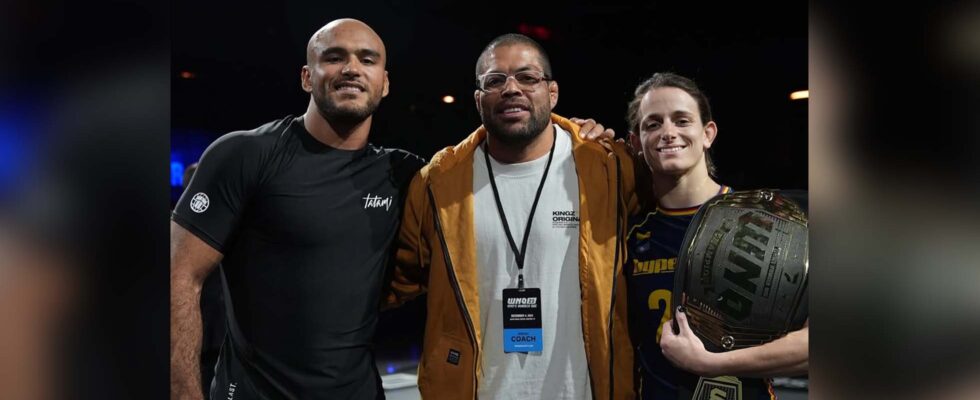
Adele Fornarino is often described as the “lady GOAT” of Brazilian Jiu-Jitsu. In a recent interview with Benjamin Marks on the Partizan Grappling podcast, Fornarino shared her thoughts on toxic culture in BJJ and the importance of calling out problematic behavior.
When asked what she would change about the BJJ industry, Fornarino didn’t hesitate to address a core issue: the sometimes toxic power dynamics created by the belt system hierarchy.
“The intensity that comes with the hierarchy in gyms has a habit of creeping into some toxic areas where just because you have a black belt, you can treat somebody in a particular way,”
Fornarino explained.
“I don’t agree with that.”
She acknowledged the tradition of “hazing” in BJJ culture but emphasized that problems arise when boundaries are crossed:
“When it gets into just flat out the white belt is just a subordinate and doing what they’re told, I think that is where we’re creeping into some dangerous territory.”
Fornarino highlighted that this dynamic becomes particularly problematic in gendered interactions:
“Unfortunately when we bring it to a male black belt and a female white belt, that dynamic I don’t think is a very healthy dynamic.”
Her coach, Jake O’Driscoll, owner of Essence BJJ in Perth, echoed these concerns, noting: “We’ve come to the realization you couldn’t make a more potentially dangerous power dynamic environment than a lot of jiu-jitsu gyms.”
Fornarino pointed out that changes are happening, albeit slowly:
“Because more females are moving into the space, they have a bigger community that can see and notice when these things are happening. So, it’s getting caught out a little bit earlier and more often, but it still happens. It definitely still happens.”
Fornarino also addressed the exploitation of athletes within the competition circuit. She emphasized the importance of fighters understanding their worth and seeking proper support when navigating contracts and business dealings.
“There’s a very slippery slope between opportunity and just flat out being taken advantage of,”
she noted.
“I think that athletes need to recognize that they’re not lawyers, they’re not managers… So to source out help in those things and people that are more aware of contractual agreements and obligations, I think that’s very important.”
Both Fornarino and O’Driscoll advocate for athletes to find training environments that support their growth without toxic elements. Fornarino explained her approach to choosing where to train:
“I’ve been in environments where the training is excellent, but I personally didn’t gel with that culture. So, I needed to find a space that was best for me.”
She emphasized the importance of coaches being open to collaboration rather than creating possessive relationships with their athletes:
“It’s important that coaches learn how to deal with other coaches and work in a holistic way with multiple different people.”
As one of the most accomplished grapplers in the world at just 25 years old, Fornarino’s willingness to address these issues carries significant weight in the BJJ community. Her message is clear: technical excellence in BJJ must be accompanied by healthy training environments and professional treatment of athletes.
For those coming up in the sport, Fornarino’s advice centers on professionalism and self-respect:
“You have to have enough respect in yourself to treat yourself like a professional. You have to make sure that the team around you is behaving and treating you like a professional as well.”
