
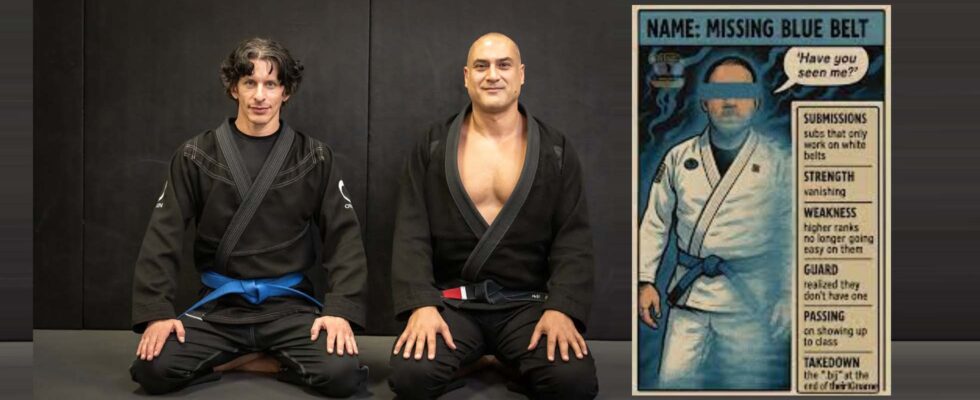
Brazilian Jiu-jitsu black belt Roy Dean recently shared his thoughts on a topic many practitioners contemplate but few discuss openly: when it’s appropriate to walk away from Jiu-jitsu.
Dean, with over 30 years of martial arts experience, approaches the subject with a balanced perspective that acknowledges both the transformative power of Jiu-jitsu and the reality that it isn’t necessarily a lifelong journey for everyone.
Dean emphasizes that Jiu-jitsu requires an initial investment before yielding returns. “You put knowledge and experience into your combat database, and over time, you start filling in the spreadsheet,” he explains in video. This investment period can be challenging, and Dean himself almost quit at blue belt due to frustration.
“I wasn’t doing that great on the mat, and I got frustrated,” Dean recalls of his early blue belt days. “I remember I went to Claudio Franza… I said, ‘I’m going to quit for a year.'” Fortunately, his instructor provided the encouragement he needed, telling him: “If you want to learn how to fight, stay here.”
Dean offers a simple yet profound answer: “You should quit Jiu-jitsu when you feel the art doesn’t serve you anymore.”
He elaborates, “You should have the art serve you. It should improve your life.” While Dean credits Jiu-jitsu with enhancing his own life through increased physical capacity, travel opportunities, and meaningful relationships, he cautions against over-commitment.
“You can also throw your whole life into Jiu-jitsu, and it’ll eat you up and spit you out, leave you injured, broken, and bitter,” he warns. “Don’t step over that line where you sacrifice everything for the art. The art is impersonal. It does not care about you.”
Dean also highlights that stepping away doesn’t have to be absolute. He mentions a fellow black belt who “doesn’t roll anymore” but still teaches and instructs. This “reduced expression” allows practitioners to maintain their connection to the art while adapting to changing physical capabilities or priorities.
For those concerned about leaving before achieving certain milestones, Dean suggests trying to reach purple belt before deciding to quit. “If you love Jiu-jitsu, try to make it to purple,” he advises, noting that this typically takes three to five years and represents the point where practitioners are truly “doing Jiu-jitsu.”
An important distinction Dean makes is between temporary frustration and a fundamental misalignment with the art. “Don’t mistake frustration for the art not serving you. That’s just where you’re at in the development process,” he explains.
The challenges and obstacles inherent in learning Jiu-jitsu are actually valuable parts of the journey. “The obstacle becomes the way. You have to experience failure to learn how to be creative and work around strength, speed, and power,” Dean notes.
Ultimately, Dean offers reassurance to those contemplating leaving Jiu-jitsu. “To all of my friends, whether you’re a black belt or not, it’s okay to leave the art. You don’t need to feel guilty about it,” he affirms.
“Be a well-balanced human, not just a Jiu-jitsu player,” Dean concludes, encouraging practitioners to maintain perspective and prioritize their overall well-being. And for those who do step away, he reminds them that “Jiu-jitsu is the constant companion in your life” that will always be there if they choose to return.
