
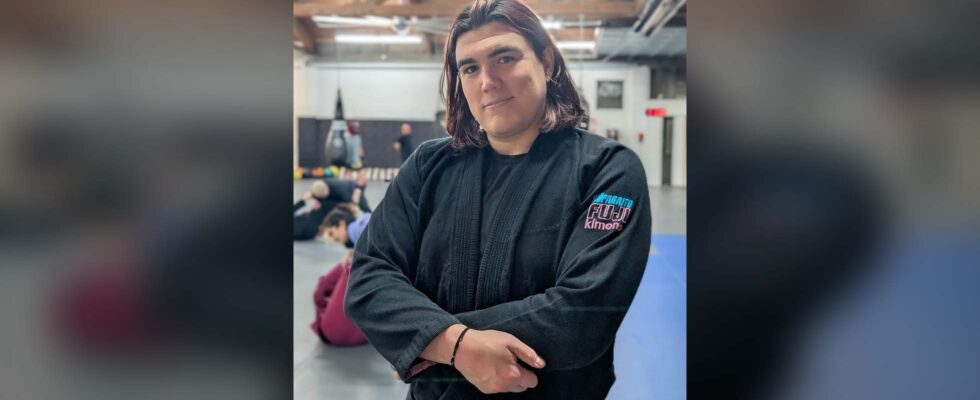
In a recent episode of the Fighting Matters podcast, three-stripe black belt Molly Reis addressed misconceptions surrounding transgender athletes in combat sports, sharing both personal experiences and scientific perspectives on the biological realities of hormone replacement therapy (HRT).
Reis, who has practiced jiu-jitsu for 21 years and transitioned about a year and a half ago, explained how hormone therapy significantly alters a transgender woman’s physiology. “What those studies have found is that trans women tend to have a…they’re much closer to cis women than cis men,” Reis stated during the conversation.
The Seattle-based instructor detailed the physical changes she’s experienced since beginning HRT, including substantial decreases in muscle mass, grip strength, and testosterone levels. “My tea [testosterone] is at 26 right now and it’s been steadily falling. I started at…325, that neighborhood. So it’s less than 10% of what it used to be,” Reis explained.
For context, she noted that cisgender women typically have testosterone levels between 15-70 ng/dl, while cisgender men range from 250-900 ng/dl. “I’m talking like I’m maybe 1% of some of these…cis males,” Reis said, highlighting how dramatically hormone therapy reduces testosterone levels.
Beyond strength changes, Reis described broader physiological shifts: “The first thing you notice is kind of your skin gets softer…your body will start distributing fat in different places.” She mentioned going down a shoe size and experiencing narrower shoulders, changes consistent with feminizing hormone therapy.
During the discussion, Reis challenged the disproportionate focus on transgender athletes in sports debates, noting that scientifically, “there is more variation in the ciswomen athlete population than there is between…trans women and cis women.” She pointed to exceptional cisgender female athletes like Gabby Garcia as examples of natural physical variation that sports already accommodate.
Reis also addressed what she called “concern trolling” from people who suddenly claim to care about women’s sports when transgender inclusion is discussed, despite showing little prior interest in women’s athletics. The black belt instructor now teaches “Filthy Fridays” at Combat Arts Academy in Seattle, where she’s found a supportive community after separating from her previous gym during transition.
Reis encouraged other transgender and queer individuals interested in martial arts to seek out supportive communities, noting that “you will find more support than you expect if you look.”
