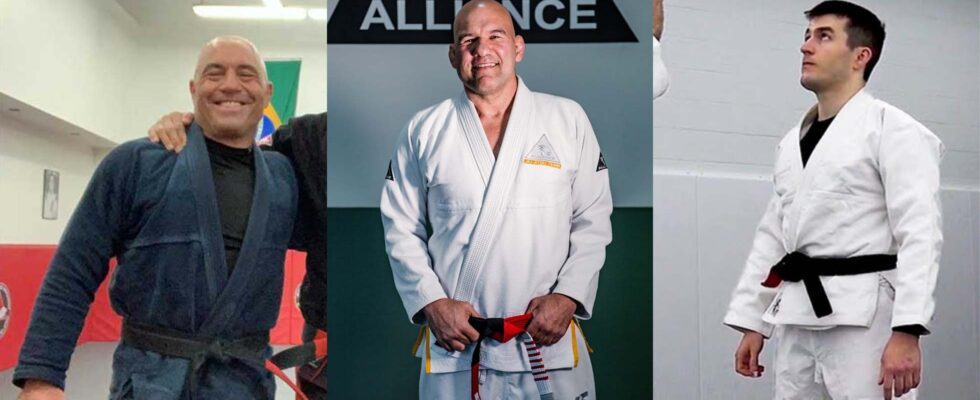
In a candid conversation at Aliança Jardins, legendary Jiu-Jitsu instructor Fábio Gurgel shared a profound observation about martial arts and aging that resonates with practitioners worldwide.
“Jiu-Jitsu is the only martial art you can practice in a true way after 40,”
Gurgel stated, highlighting what makes the gentle art uniquely sustainable for mature athletes.
This insight came during a discussion with power couple Kyra Gracie and Malvino Salvador, where Salvador’s personal journey perfectly illustrated Gurgel’s point. After training in boxing for six years, Salvador found himself at 37–38 years old wanting to return to martial arts.
“You go to boxing, a punch to the face…”
Gurgel explained, emphasizing the physical toll other combat sports take on aging bodies. Salvador’s concern wasn’t just about training intensity—it was about finding a suitable environment that matched his life stage.
“But the age group we see most concentrated in gyms today is between 35 and 45, right? These are people who have developed an awareness and now want to practice a martial art.”
Mark Zuckerberg trains BJJ and MMA at age 41
“So people are beginning to train within this age range when their lives are already more settled, right? They’re often established and stable and this demographic has started to grow. It’s also largely the opinion-forming group. When you look at Jiu-Jitsu practitioners today, you see people like Joe RoganLex Fridman—they’re all in their 50s, right? They all train, they all talk about it constantly.”
Gurgel’s observation reflects a broader shift in Brazilian Jiu-Jitsu demographics. Today’s academies see their highest concentration of students in the 35–45 age range—people established in their careers seeking both physical activity and mental stimulation. These practitioners represent opinion-formers and influencers who recognize Jiu-Jitsu’s unique value proposition: a martial art that allows full engagement without the harsh impact associated with striking sports.
Gurgel’s academy philosophy reflects this understanding. While maintaining its competition DNA, Aliança structures schedules with 30–40-year-olds in mind, recognizing that most practitioners aren’t training for world championships. They’re pursuing Jiu-Jitsu as a lifestyle—a sustainable practice that grows with them rather than against them.
The wisdom in Gurgel’s statement extends beyond physical preservation. Unlike sports requiring sudden bursts of speed or the ability to absorb punishment, Jiu-Jitsu rewards experience, timing and technique—attributes that improve with age. A 40-year-old might struggle to compete in boxing or kickboxing against younger opponents, but in Jiu-Jitsu, they can continue developing genuine skill, applying techniques in live training without fear of life-altering injuries.
As cultural icons like Joe Rogan, Lex Fridman and countless other professionals embrace Jiu-Jitsu in their 40s and 50s, Gurgel’s observation proves prescient. Jiu-Jitsu isn’t just something older practitioners can do—it’s something they can excel at, contributing to a vibrant community that values longevity, continuous improvement and the intelligent application of technique over raw athleticism.