
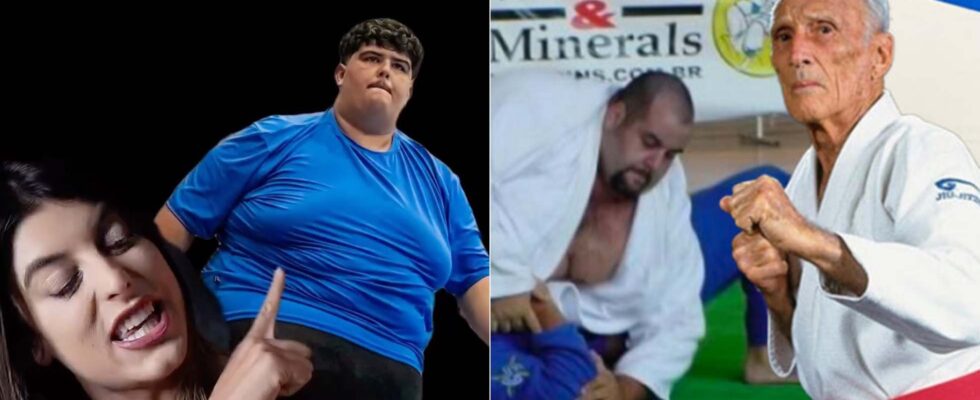
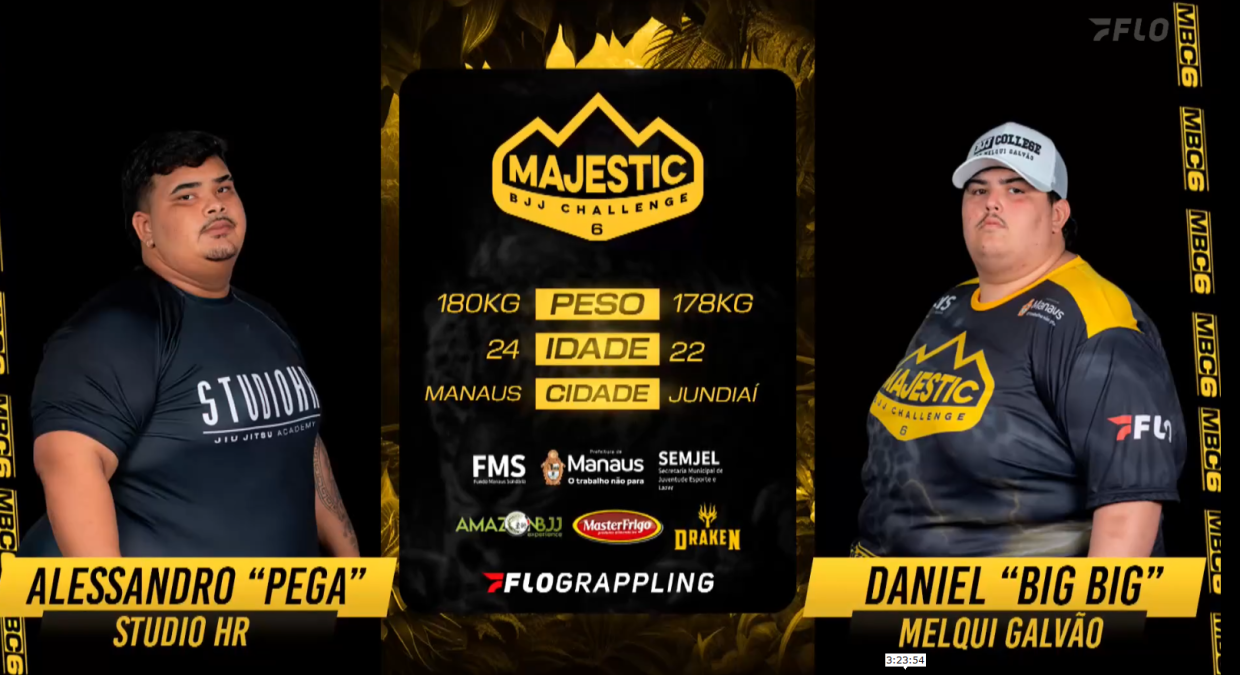
Daniel Silva, known as “Big Big,” is a 22-year-old blue belt who currently weighs approximately 396 lbs (180kg). He recently competed against Alessandro Pega in a match that has divided the BJJ community.
Big Big’s journey is remarkable—having previously weighed 507 lbs (230kg), he has lost roughly 110 lbs (50kg) since discovering jiu-jitsu three years ago.
Big Big’s personal narrative is undeniably inspiring. According to Brazilian commentator Raphaella Amorim, the young athlete fell into severe depression due to personal and family issues, reaching his peak weight of 507 lbs (230kg). Jiu-jitsu became his lifeline, helping him escape depression and lose over 143 lbs (65kg). He now trains under Melqui Galvao’s team and recently traveled by airplane for the first time to compete at an event in Manaus, where he won by decision.
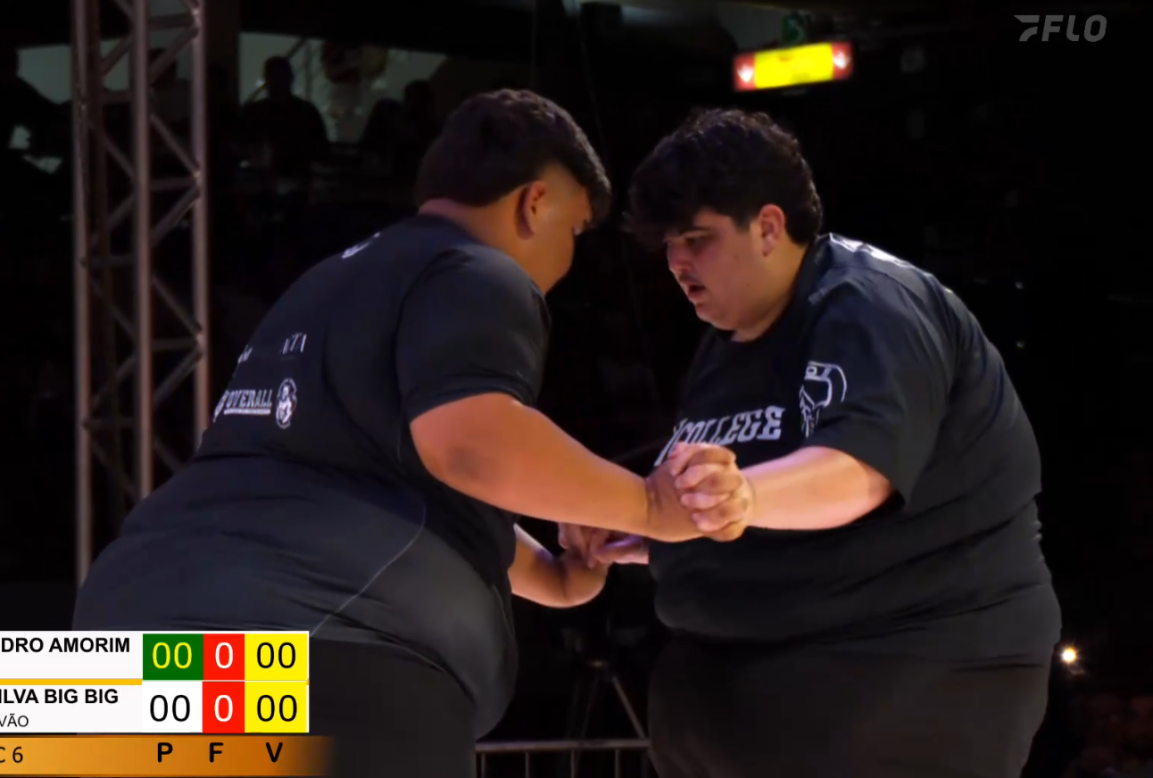
However, the inspiring backstory hasn’t shielded the match from harsh criticism. Professor Damião Matias, a black belt, offered blunt commentary on the bout’s quality.
“With regards to the match, there’s no way to say that was beautiful, because it wasn’t,”
Matias stated. He went further, describing it as containing
“absolutely nothing of jiu-jitsu. Just two kids wanting to assert themselves and crashing into each other until the end.”
While expressing hope for both competitors’ continued improvement, Matias emphasized that if he were coaching them his first priority would be
“focusing on the discipline of weight loss, because they are very large.”
The controversy touches on deeper philosophical questions about BJJ’s identity. Helio Gracie, one of the sport’s founders, established specific standards for instructors that included maintaining appropriate physical condition and avoiding excess weight. These guidelines reflected BJJ’s emphasis on technique over size—the very principle that made the art revolutionary.
The accent on jiu-jitsu and fitness goes further than Helio Gracie. Several years ago UAEJJF instituted a maximum weight a competitor is allowed to have, limiting women to 95kgs female and men to 120kg. This prompted Tayane Porfirio to lose a significant amount of weight.
Many practitioners see paid appearances by significantly overweight competitors as contradicting this foundational philosophy. As one commenter noted:
“Inclusion is not delusion… Championship is not a healthy environment. The public, athletes, teachers want to see jiu jitsu matches and not ‘overcome’ of ‘inclusion.'”
Another practitioner questioned what Helio Gracie would think of such matches, adding:
“We have to stop romanticizing things. Mostly obesity… it’s valuable to be training jiujitsu or any other martial art or movement but realistically and without romanticization.”
The split in the community centers on competing values. On one side many celebrate Big Big’s transformation and argue that jiu-jitsu’s life-changing power should be showcased regardless of technical execution.
On the other side critics argue that professional events have standards to maintain. They contend that paying competitors to participate in matches lacking technical merit sets a problematic precedent and potentially exploits athletes for entertainment value rather than celebrating genuine martial arts skill.
The debate raises uncomfortable questions: Can the sport celebrate personal transformation while maintaining competitive standards? Does featuring such matches help or harm the athletes involved? Is criticism of technical quality incompatible with supporting someone’s journey?
Professor Matias acknowledged the difficulty of offering honest critique in today’s climate, noting that
“nowadays you can’t say anything, because everyone attacks you, interprets it however they want, says you’re acting like a hater.”
Yet he insisted on the importance of honest assessment alongside compassion.
