

Brazilian jiu-jitsu has never had more promoters. Yet the sport feels in a fundamental way smaller than the sum of its parts.
This is not an athlete problem. It is not a product problem.The problem is that almost nobody in a position of promotional power knows how to tell those stories or has thought seriously about what it would take to do so.
Consider what happened in the lead up to Tye Ruotolo‘s most recent match. Ruotolo is one of the most watchable competitors the sport has produced. In the promotional window before the event the only quote that generated any outside traction was a recycled comment about Gordon Ryan. That detail is revealing. It is not that Ruotolo said something wrong. It is that the entire promotional apparatus around him could only think to bait one more round of the sport’s oldest drama to generate interest.
Gordon Ryan has spent more time retired than not in the last 5 years. Recycling a talking point that even preceeded his PED admission seems tired and lazy. Surely there are better ways for a 23 year old to market himself.
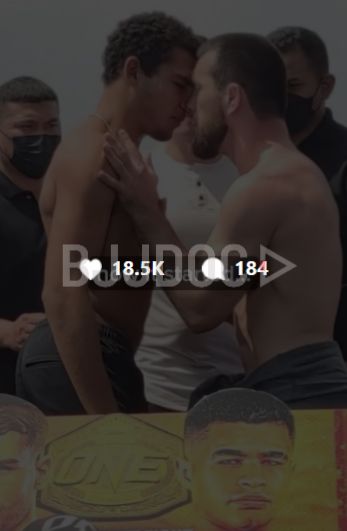
When that failed to move the needle his opponent shoved him during the face offs. An MMA style confrontation engineered for clip ability. It is a formula so familiar it has become parody.
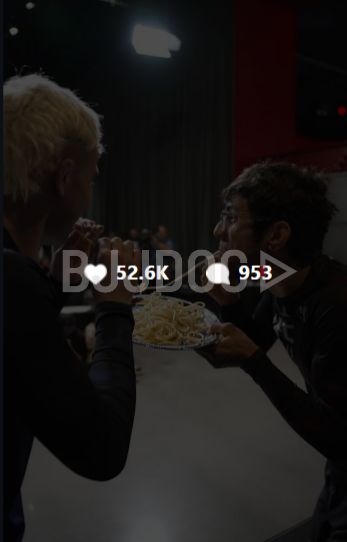
Mikey Musumeci offered his opponent pasta. Mason Fowler blew kisses. These moments received their brief moment on short form feeds and probably generated some amused reactions from people who had never heard of either competitor. Almost none of them turned into viewers of the actual event.
The stunt has become a substitute for narrative and the sport is drowning in substitutes.
What the viewership numbers surrounding UFC BJJ events reveal is stagnation. UFC BJJ 6 presented a lineup that on paper should have moved an audience. The card featured Ffion Davies, Nicky Rod and Mason Fowler.
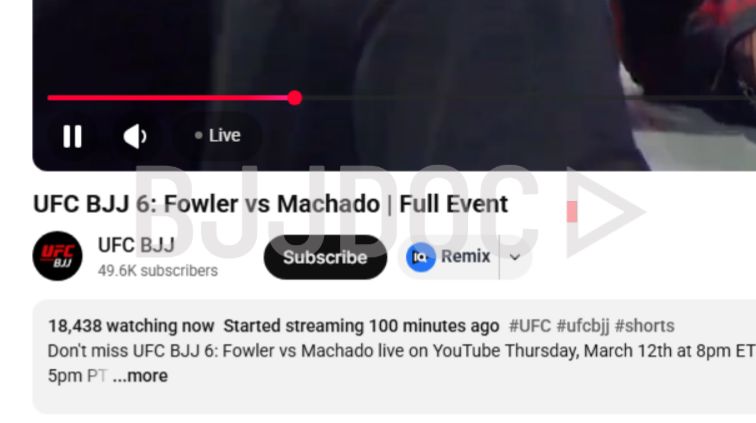
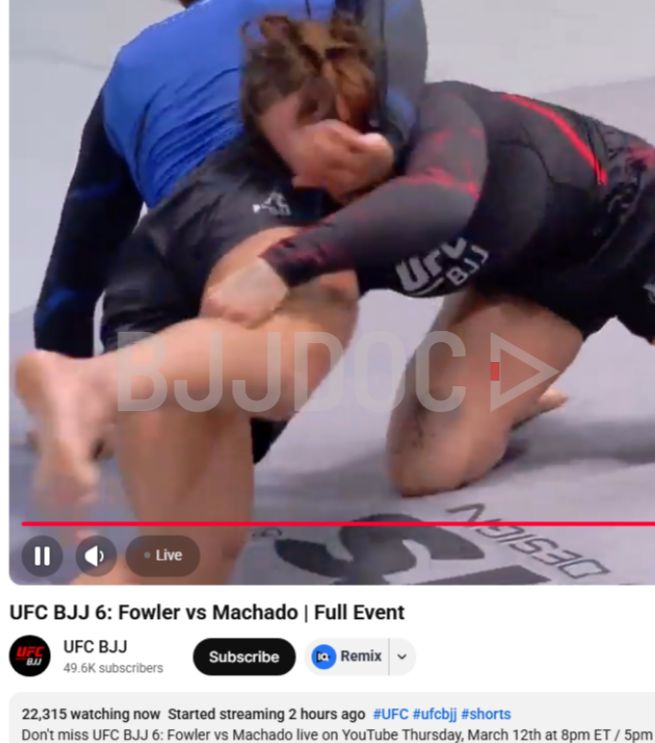
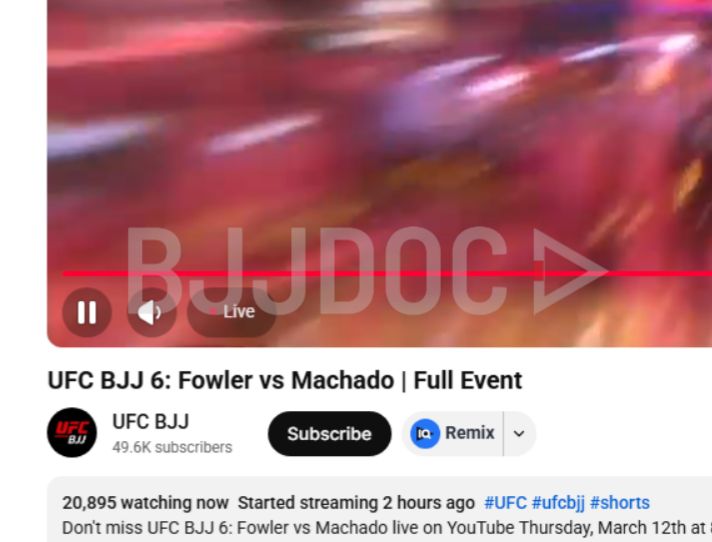
Concurrent viewers hovered around 22,300 during Davies vs Cassia Moura The broadcast showed around 20,895 viewers near the conclusion of Nicky Rod vs Elder Cruz. Roughly 18,000 viewers were present an hour earlier.
The viewership pattern told a story of stagnation. Numbers did not surge when recognizable names appeared. Post event viewing trends, based on available reporting, did not align with Google Trends interest for related search terms during the same period. Whatever ceiling UFC BJJ has constructed for itself this card with this lineup did not approach it. By some measurements it appears among the lower performing events in the series so far.
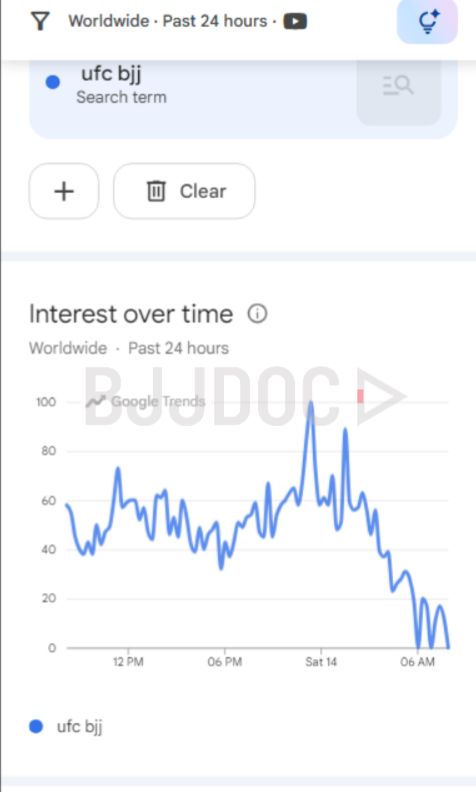
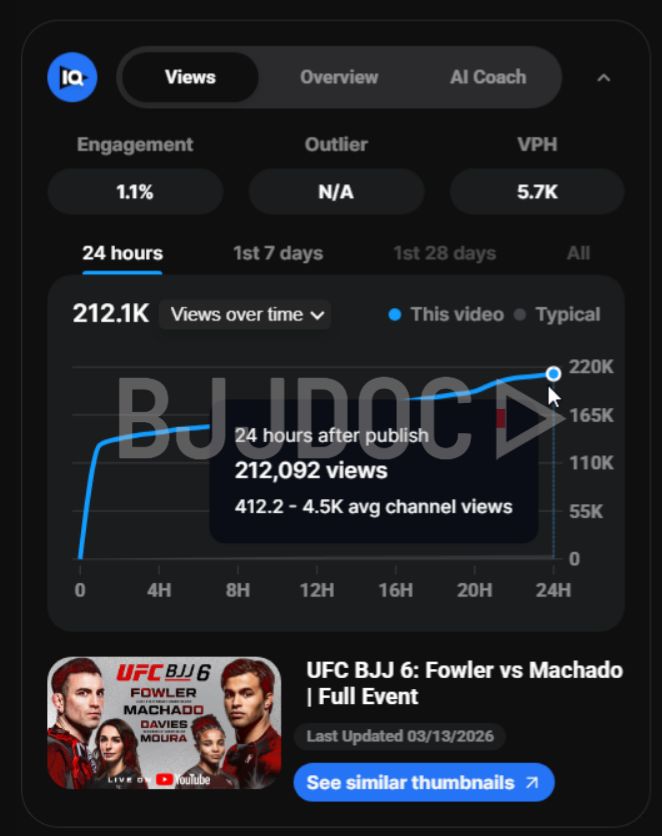
The logical conclusion is that this is not a talent sourcing issue. UFC possesses infrastructure, reach and brand recognition that every other grappling promotion would compete assertively to obtain. Yet the system still does not function at the level it should. The issue sits north of the product itself. The pipeline connecting the athlete and the audience is broken.
Ruotolo again illustrates the problem. You have to promote yourself.
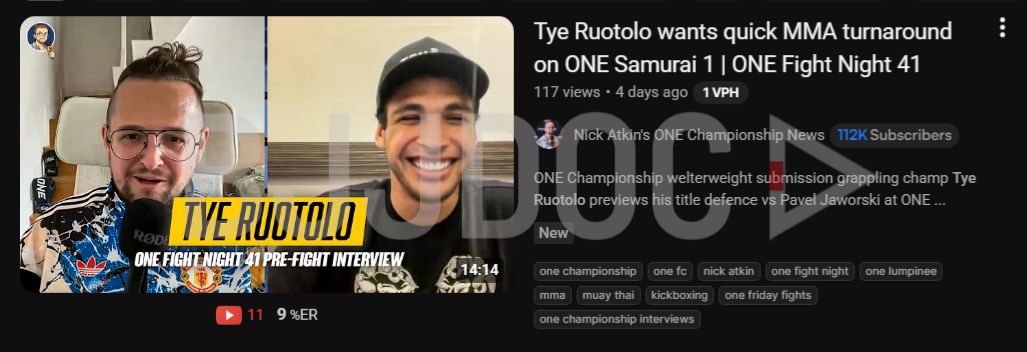
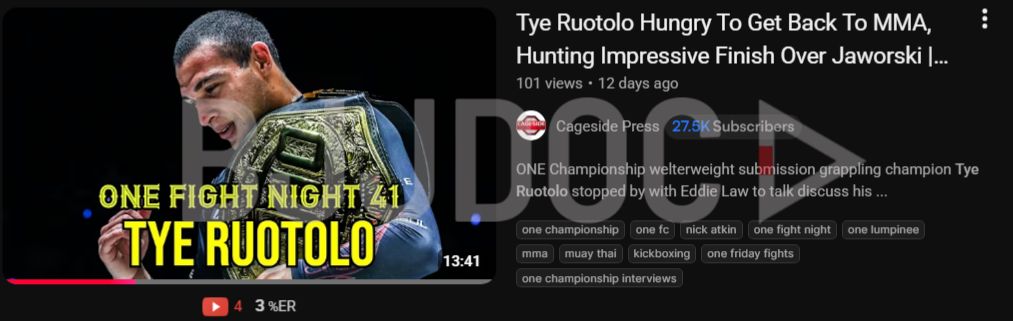
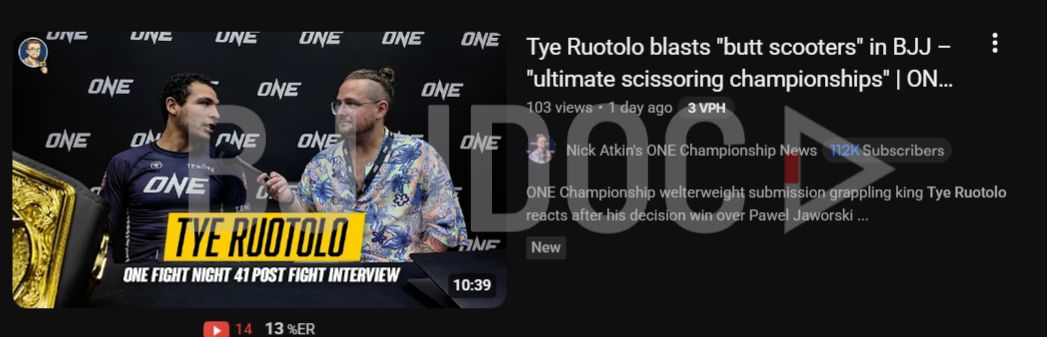
His appearances occur mainly on platforms that ONE FC controls or pays for. There is no outreach strategy. No attempt to place him in front of viewers who are unfamiliar with him. The result is that one of the most marketable athletes in the sport fades in and out of focus with even the hardcore fans unaware he’s competing at times.
Mikey Musumeci represents a partial exception. He has invested time into cultivating a real social media presence and his role as a central figure within ONE Championship for years has allowed him to accumulate momentum. More recently he has become a lightning rod within the UFC BJJ conversation as well. Engagement around him is growing. Yet even that growth often appears to have happened around the promotion rather than through it. Musumeci largely built that momentum himself against the grain of how grappling athletes are usually managed.
UFC BJJ did interviews with the main card participants ahead of the card but you need to be a detective to find them. Not to mention the marquee question is what is jiu-jitsu and what do you think of our bowl. What exactly is that supposed to accomplish?
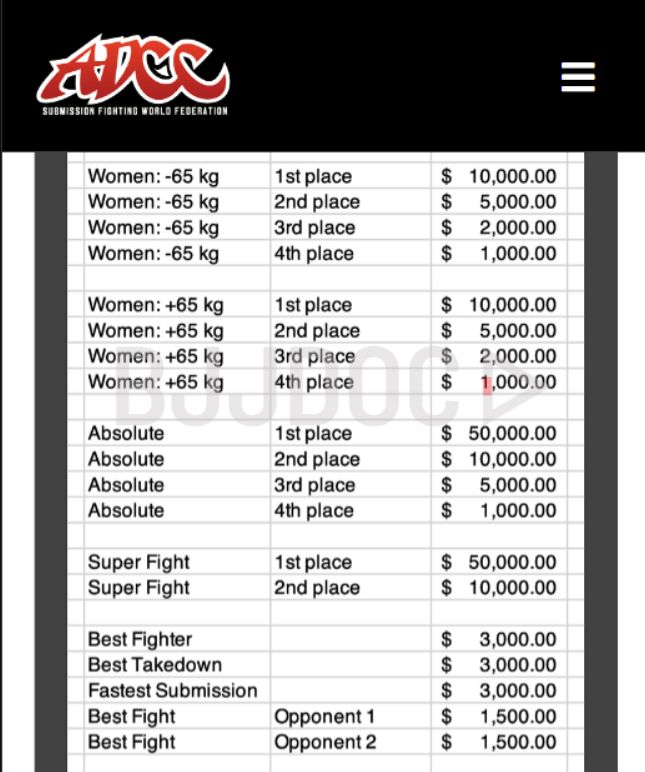
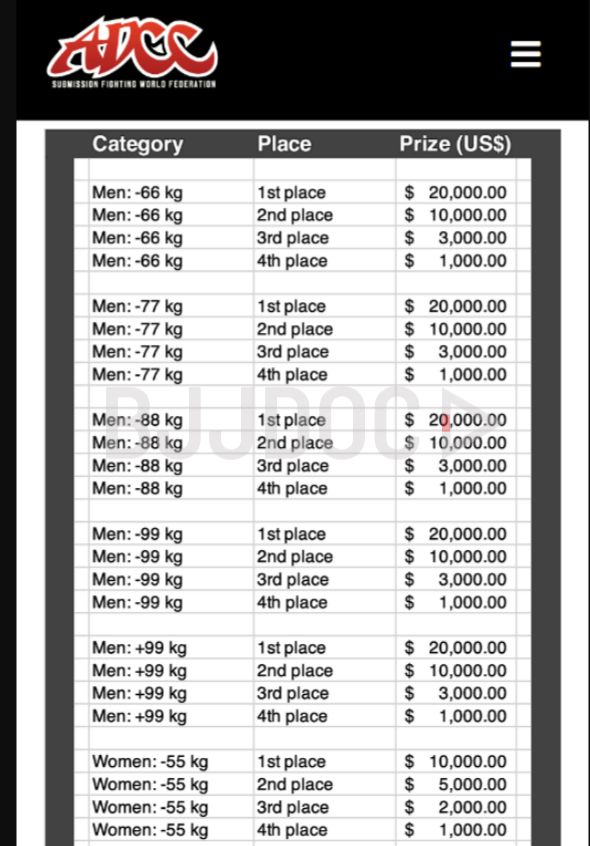
The situation surrounding ADCC reflects the same underlying structural weakness. In many cases you’ll be paying to get injured for a chance to win exposure. The current purse structure can’t even match what the biggest names earn doing a seminar for a single weekend.
FloGrappling occupies an unusual position in this ecosystem. The company likely controls the largest authentic social media footprint within the grappling world. The accounts are legitimate and the followings developed over years. The brand carries recognition within the community. Yet the output increasingly resembles a promotional department operating on limited resources with visible cost cutting and declining ability to generate any real signal beyond the disgruntled existing audience. Flograppling got publicly humiliated when Ethan Crelinsten called for UFC BJJ contract publicly on their platform yet they’ve not even dared to make an actual official statement on the matter. General Manager Ben Kovacs made genuine efforts to reform the reputation of the reviled giant seemingly to no avail. Everyone else at flo is just hoping people will tune in for the thousendth edition of random Mat 6 live broadcast featuring ambiental noise and two Brazilians who paid to compete and win a chance to maybe get a US visa some day.
The PGF illustrates another dimension of the same problem. Ask a random sample of grappling fans to explain the PGF system and most will struggle to do it.
What is it? What does it do? What does it matter?
The long and short of it all is next to nothing.
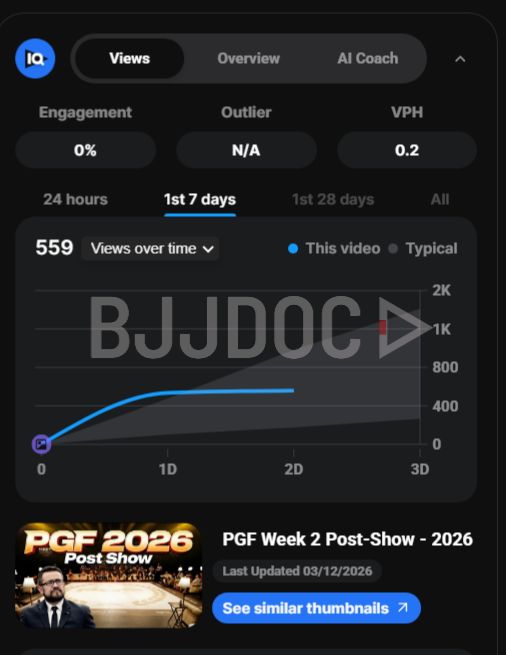
Youtube api allows us to see the extent of their youtube memberships. Their live broadcast numbers are equally unimpressive.
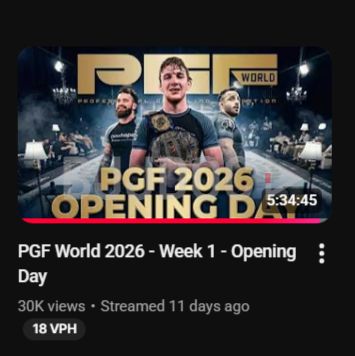
Those events also highlighted a deeper structural tension. The traditional IBJJF pay to compete model, the backbone of how many grapplers historically approached the sport, clashes directly with the process of building stars. An ecosystem where athletes pay to compete cannot simultaneously sustain the level of promotional investment required to turn those athletes into recognizable public figures. The economic incentives face opposite directions.
Brazilian jiu-jitsu in 2026 sits at a genuine inflection point. The sport has capable athletes. It has many promoters and at least one platform with theoretical reach capable of pushing the sport further into pop culture. What it lacks is a coherent answer to a question every sport eventually faces. Why should someone who does not already care start caring?
Until promoters treat that question as their central responsibility the numbers will remain where they are, a ceiling that from the inside continues to look like a floor.
