
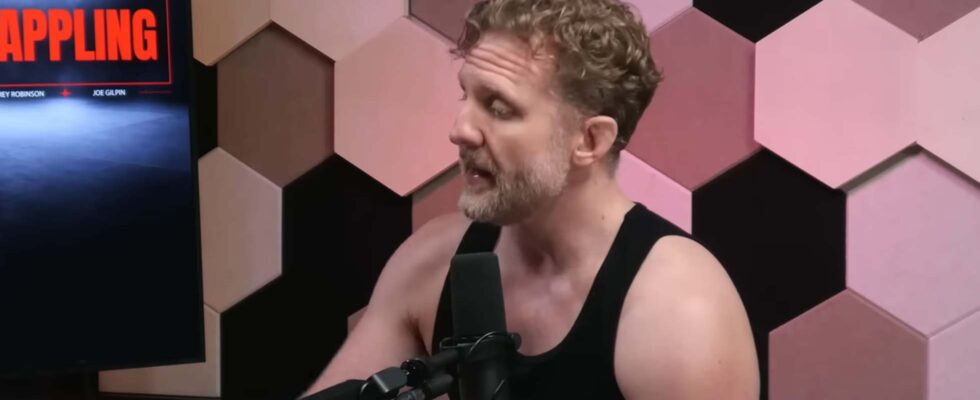
In a recent episode of the FloGrappling Show, Greg Souders sat down for Ecological 101 conversation. Souders offered commentary focused on the state of the word “ecological” itself within the jiu-jitsu community.
When the host brought up how people seemed to be running with the ecological approach without fully understanding it, Souders did not hold back.
“I think that one of the issues with any community where there’s a pop culture is that they’re going to bond to any buzzword or any new thing and it’s exciting and they’re going to run with it,” he said. “Which in essence is kind of okay because that’s how you get inspired to try and investigate and do things. But the problem comes when people stop their investigation.”
Souders went on to describe a pattern he sees repeatedly, where coaches and practitioners latch onto the terminology without putting in the deeper work required to understand the philosophy behind it.
“Oh, I already understand this because we’ve always been doing this,” he said, characterizing the attitude he finds most problematic. “People are so eager to say they know it, to use it, to sell it, that they’re not going through the process of pouring the thing until you get the foam right type of thing. They’re just saying things they don’t understand.”
For Souders, the foundational definition of the ecological approach is clear, even if others seem to blur it.
“An ecological approach is just a way we look at the relationship between the individual, the task, and the environment. This relationship is there. It’s embedded with each other. We can’t actually separate it. We can’t separate the individual from the task or the environment. We have to assume they’re working as a system.”
He also addressed the so called hybrid approach that many coaches are promoting, dismissing it outright.
“People are just mixing buzzwords and saying things. There’s no hybrid, guys. There’s no hybrid. Even if you’re drilling, that’s still ecological. You’re just taking away the information source. The information source is now a static body versus the information source we need, which is a resistant and unpredictable body.”
Souders also reflected on how long it took him personally to develop a real command of the approach.
“I started working on this in 2014,” he said. “It took me quite a long time to really understand how to develop a truly effective practice and a language I could use to describe it to regular people. A lot of people haven’t gone through that.”
He described seeing coaches offering what he called “eco class on Tuesdays” as a prime example of the kind of shallow engagement with the material that frustrates him.
“There’s not enough work being done in the space. People aren’t digging hard enough into the why.”
