

ADCC veteran and jiu-jitsu world champion Robert Drysdale appeared on the Jiu-Jitsu Revolution podcast to discuss the state of combat sports culture.
During the conversation, he pointed to Euclides Pereira, an obscure figure to most modern fans, as the clearest example of how the sport has lost sight of its roots. Spireto, the only man to have ever defeated Carlson Gracie in a match, is now around 90 years old. According to Drysdale, he is living without family and facing financial hardship in Brazil while relying on former students for support.
“I think it’s shameful on the jiu-jitsu community that we don’t know who he is,” Drysdale said, expressing frustration at how easily pioneers are forgotten. “I think it’s shameful that we put on a pedestal people that are absolute clowns. And the people who did the heavy lifting, who competed, who retired undefeated. The man is a hero. And we don’t even know his name. He’s like 90 years old struggling in Brazil. It’s absurd.”
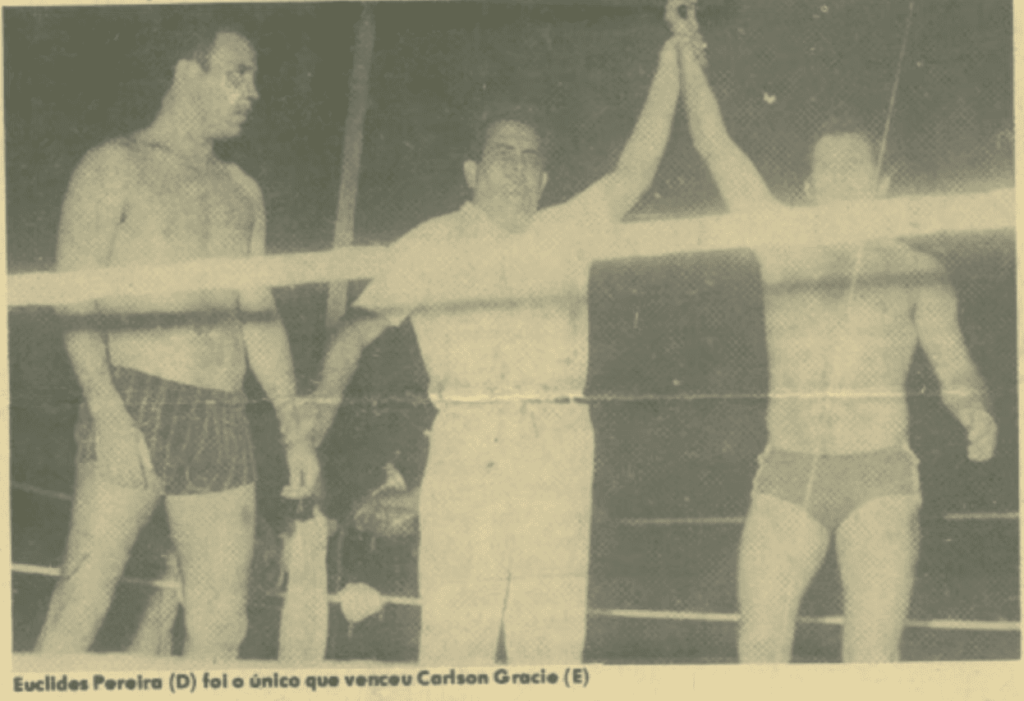
For Drysdale, the situation reflects a failure in how respect is distributed within the sport. He argued that individuals with wealth, but little connection to martial arts, often receive admiration and influence, while those who built the discipline through sacrifice are left in obscurity.
“No one knows who Euclides Pereira is,” he said, doubling down on the point. “But they’re giving mad respect to X, Y, and Z simply because they’re rich. What the hell did you do to deserve respect?”
His criticism extended to the increasing presence of business figures in leadership roles across combat sports organizations. In his view, allowing non-practitioners to shape the direction of martial arts has created a disconnect between the sport’s values and its decision-making structure.
“I think the mistake we have made as a martial art, and this is a global critique I make of jiu-jitsu, is allowing these people that did not come up as an actual martial artist and allowing them to be in positions of power and decision-making,” Drysdale said bluntly. “The vultures.”
That line of thinking led him into a comparison between Khabib Nurmagomedov and Conor McGregor, two of the biggest names in MMA.
“Conor made way more money than Khabib, even though to me Khabib is a much better martial artist,” he said. “Not just on the mats, but off the mats as well.”
Drysdale then framed the issue as a cultural dilemma, particularly when trying to guide younger generations.
“In a world where money is the ultimate achievement in life, how do you explain to a 13-year-old that being a Khabib is better than being Conor McGregor?” he asked. “You’re going to have a hard time.”
Despite the comparison, Drysdale made it clear that his comments were not meant as a personal attack on McGregor’s work ethic or accomplishments inside the cage.
“I know, no doubt that Conor works hard and he deserves his title and he’s a phenomenal athlete,” he said. “But I’m not going to tell my students and my children that this is what we got to be like.”
For now, Drysdale’s approach remains simple: continue pointing young athletes toward role models he believes embody the values of martial arts, regardless of how the culture defines success.
“I think Khabib made enough,” he said. “I think Khabib’s got a lot of money, too. I’m pretty sure he’s fine. And he is a role model for the community.”
