
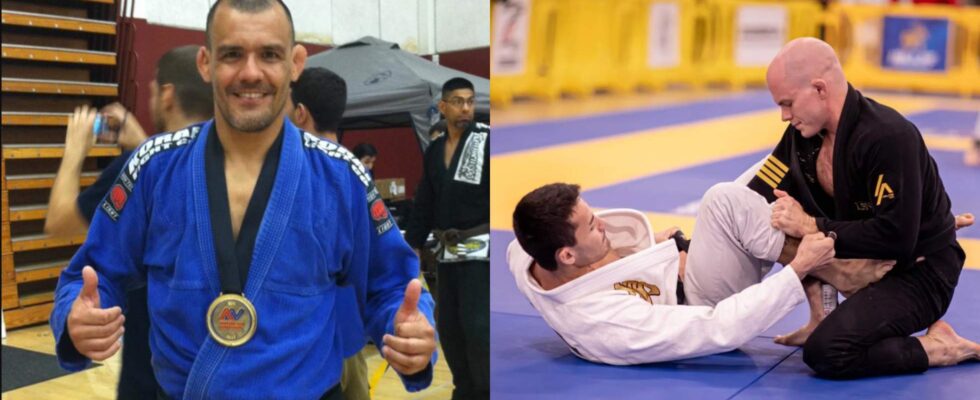
BJJ legend Ricardo “Franjinha” Miller, founder of Paragon BJJ and a sixth-degree black belt, sat down with RŌL Radio host Thomas for a recent podcast episode. During the conversation, Miller shared his honest thoughts on BJJ’s chances of reaching the Olympics.
Miller pointed to the heavy influence of privately run promotions and the lack of a unified international governing body as major obstacles standing in the way of BJJ receiving Olympic recognition.
“I don’t think it’s gonna be Olympic. It’s too much private companies running the show right now. To be Olympic, I think to be something a lot more like, you know, organization, no profit organization, different countries.”
Miller then shifted the conversation toward no-gi, suggesting it has a more realistic path to the Games than the gi format.
“I can see the no-gi be more Olympic than the gi first.”
When asked why, Miller pointed to the existing framework already in place within combat sports.
“Because they already have the wrestling, they have the freestyle, they have the Greco. There’s going to be one more style they could put. If they’re smart, they’re going to do that first.”
Miller also weighed in on what a combined submission wrestling format could look like at the Olympic level, and why he believes it is the most logical direction forward.
“I think that would be the way to go to the Olympic. If they want to put jiu-jitsu no-gi, like the submission wrestling. That’s what they call submission wrestling in America. That would be, I think, the way to go for the Olympics.”
“Like everybody involved in the wrestling embrace that and trying to bring that to the Olympics. That would be an easy thing since they’re already there, already there doing the wrestling and doing the Greco. They could kind of bring the submission wrestling as well.”
On the gi versus no-gi debate more broadly, Miller made a case for why gi practitioners have the edge when transitioning between formats, citing control, technique density, and pace of play.
“I think it’s easier. The gi is a lot more slow game. They can hold more. You can control more than in no-gi. Like anyone that’s physically strong, good condition, can give you a hard time.”
“The gi is a lot more details that you need to pay attention to. They can use your gi against you. There’s a lot more technique involved. You can hold the person more easily and apply the techniques.”
Additionally, Miller expressed hope that gi competition would eventually reach the professional and financial level seen in other individual sports.
“I think the gi is going that way. No-gi is a little bit more ahead in terms of the payment and stuff like that. But I can see the gi start to get into that kind of professional leagues. I hope it to be just as big as surfing or tennis with all the sponsors getting more involved and the players getting more paid.”
