The commentary booth at UFC BJJ has become a focal point of community frustration with athletes, coaches and practitioners across the grappling world calling for an overhaul following a recent event that many described as difficult to watch with the sound on.
Owen Jones posted a video to his social media that spread rapidly across the community.
“UFC BJJ is actually bad to watch on mute, like, generally. Jiu-Jitsu commentary is bad at the best of times, but this is actually unwatchable. Like, I’m listening and I’m like, yo, what are these guys talking about? They’re not studying any of the athletes. They’re trying to break down techniques that I have no idea what they’re talking about. They’re comparing it to goofy and mayfires that have nothing to do with what’s going on right now. It is ins ane. Mad bias doesn’t make sense. It’s ass.”
Watching the broadcast reveals a commentary approach that often appears disconnected from the action, with explanations that range from vague to incorrect.
At one point, a commentator described guard passing as difficult because the legs are in the way, then added that once past the legs, an athlete must deal with the arms pushing.
During a submission attempt by Mikey Musumeci, viewers were told he was going for “some sort of heel squeezing submission” that “looks quite painful.”
A single leg takedown was misidentified as “that Islam takedown right there.” Japanese technique names were also repeatedly mispronounced.
The issues extended beyond technical analysis into cornering decisions during the event.
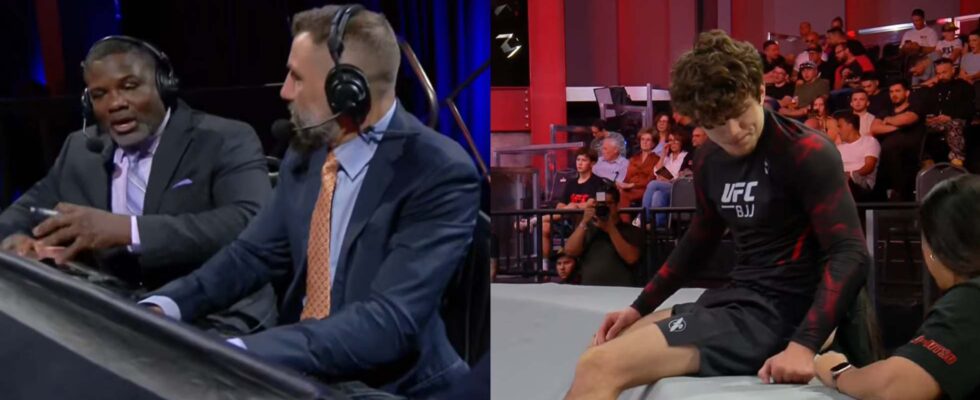
During a round involving 19 year old competitor Landon Elmore, commentary focused on his corner’s encouragement while the match was ongoing. Commentators Michael Chiesa and Din Thomas addressed the corner on air.
Chiesa stated:
“I’m questioning Landon Elmore’s corner choice tonight,”
Thomas added:
“a false sense of security”
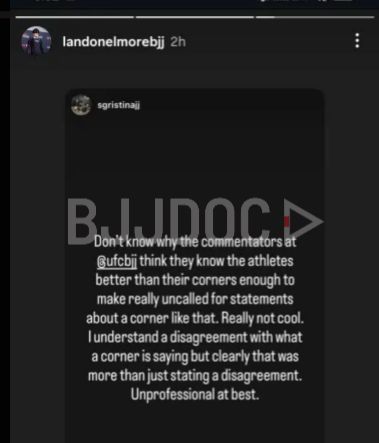
Elmore later shared community reactions, including a post that read:
“Don’t know why the commentators at UFC BJJ think they know the athletes better than their corners enough to make really uncalled for statements about a corner like that. Really not cool. I understand a disagreement with what a corner is saying but clearly that was more than just stating a disagreement. Unprofessional at best.”
While commentary teams often critique corner advice, targeting a young competitor’s coaching staff publicly crossed a line for many viewers.
Some viewers noted they switched broadcasts entirely, choosing Spanish or Portuguese commentary instead of the English feed despite not understanding the language.
This was reflected in the stats.
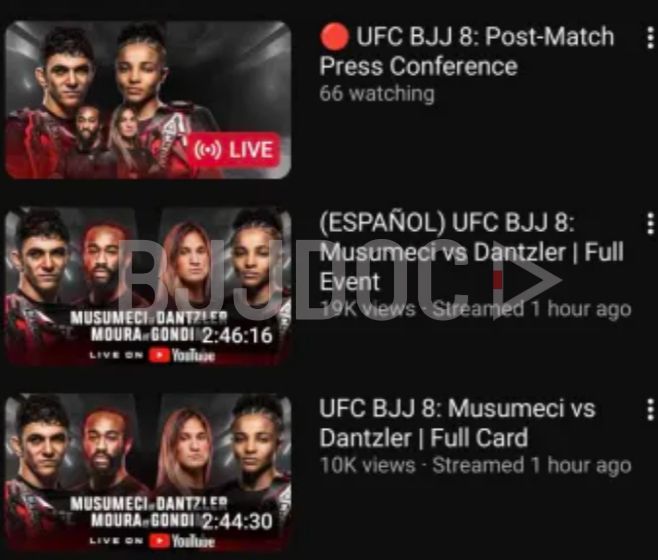
Funnily enough if you wanted to verify the authenticity of UFC BJJ stats, their spanish lanugage broadcast is a great metric.
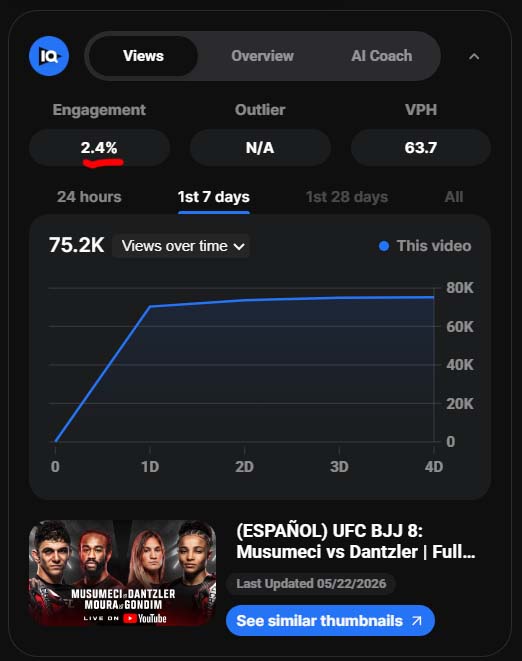
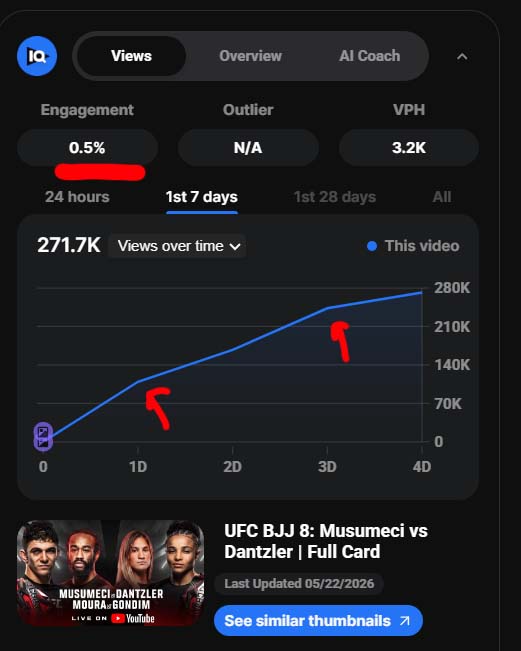
You can see the English language broadcast miraculously recover from the slump and drop engagement to 0.5% from the initial 2% which matches industry standard.
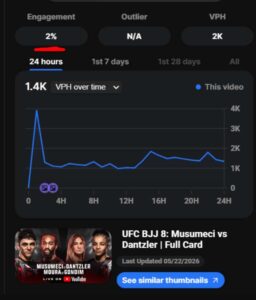
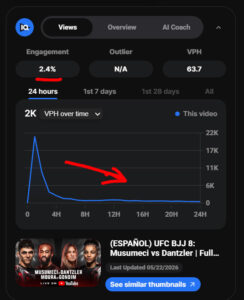
And here’s that same chart for the English language broadcast right now:
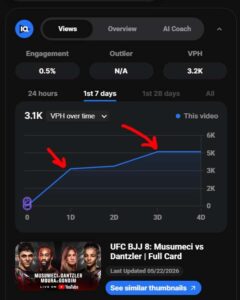
This is on track with what was done with UFC BJJ 7. It too had a very artificial growth rate.
Views per hour chart drops like a rock once a specific number of views has been reached.
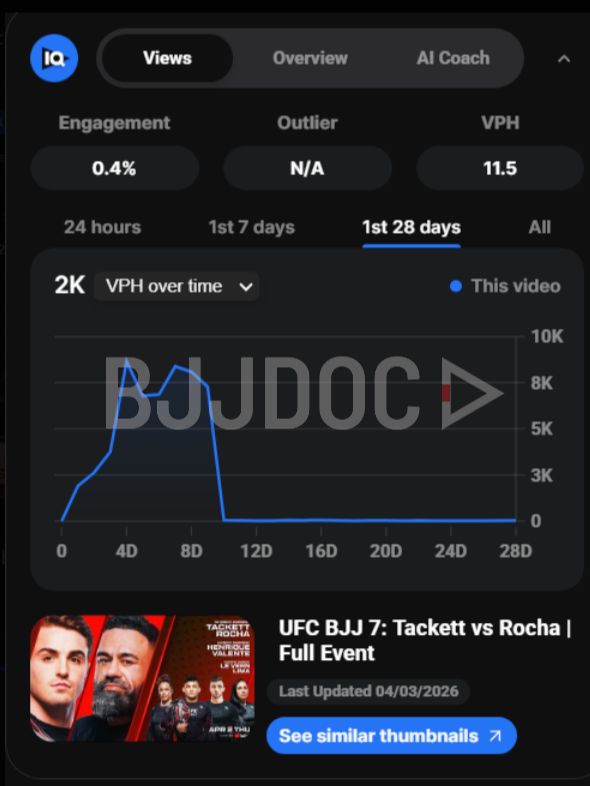
The evidence suggests UFC BJJ is optimizing for either a BJJ audience or an MMA audience; rather, they are simply trying to hit specific metrics by any means necessary. The commentary has been superficial, inaccurate, and dismissive of the sport’s development, and it only makes sense if the actual jiu-jitsu community was never the intended target audience. Why invest in real commentators and meaningful media coverage when you can satisfy investors with inflated engagement numbers?