
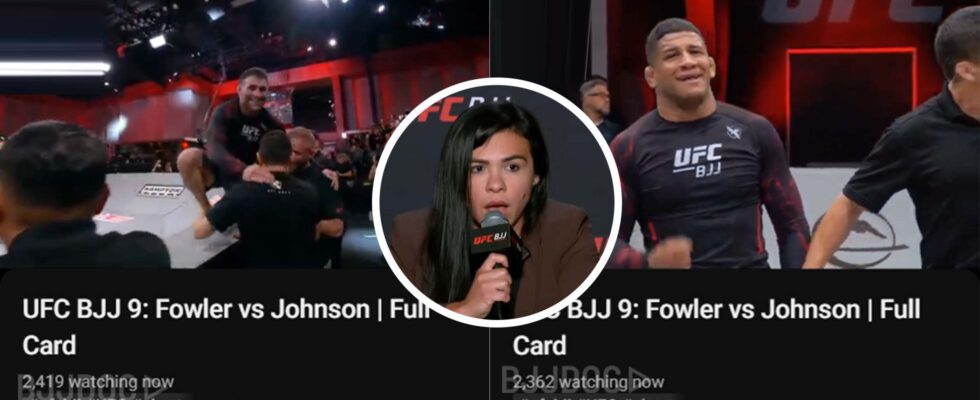
Mason Fowler defending his title, Gilbert Burns returning to the mats after retiring from MMA and appearances from Nick Rodriguez and Ffion Davies gave UFC BJJ 9 a respectable look on paper. The reality, as has often been the case with the promotion, told a different story.
The mismatches that have become associated with UFC BJJ were once again apparent. Every match on the featured portion of the card ended via a first round submission. There was little indication of closely contested competition.
One notable change between UFC BJJ 8 and UFC BJJ 9 was the absence of MMA coach Din Thomas from the broadcast. Thomas had drawn widespread criticism for his work during the previous card. His replacement was Renato Canuto, a UFC BJJ competitor currently sidelined following a PED test failure connected to an MMA bout. Canuto joined returning commentator Michael Chiesa on commentary.
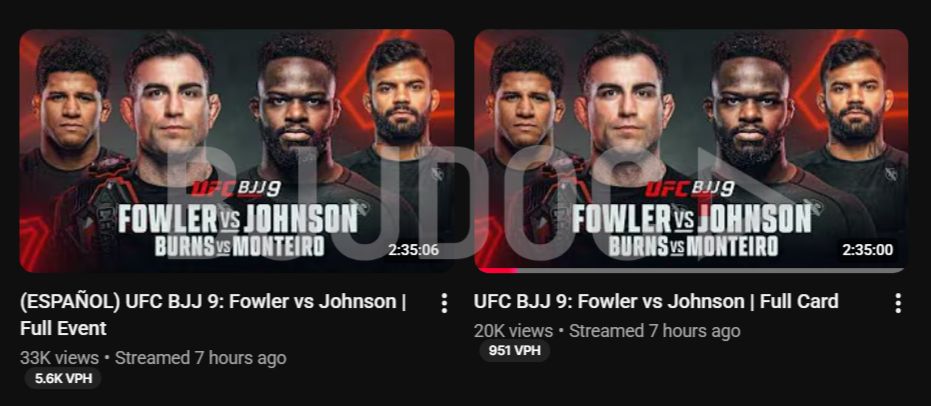
Whether the change improved the broadcast is open to debate. What is less debatable is the viewership data. The Spanish language broadcast again significantly outperformed the English language feed. Many observers attribute that gap to the quality of the Spanish presentation led by Brandon Moreno and Victor Davila, who is also known as a producing partner of Eddie Bravo.
Live viewership recorded during the featured matches showed approximately 2,300 viewers during Gilbert Burns‘ match, 2,500 during Nick Rodriguez‘ match and 2,400 during Mason Fowler‘s main event. The Spanish language broadcast averaged close to 2 times those figures across the same contests.
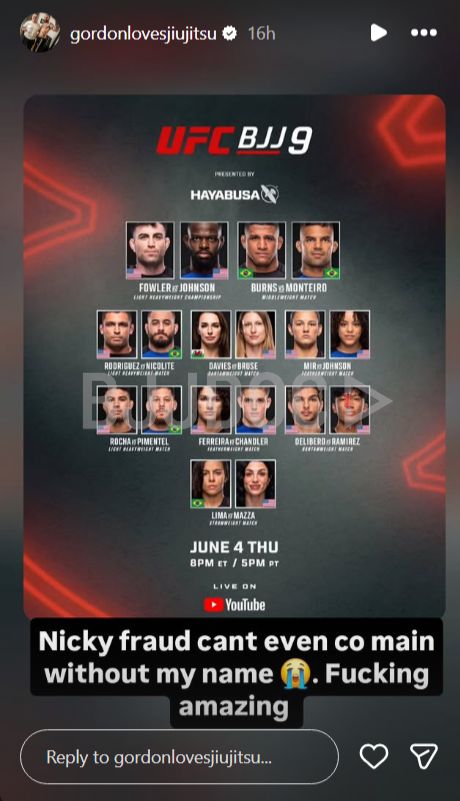
Part of the explanation may be tied to international distribution. UFC has bundled rights into the Paramount app in certain territories, including Brazil. If the promotion’s overall live audience remains in the 15,000 to 20,000 range, much of that audience appears likely to be Brazilian. That would help explain why Gilbert Burns generated little visible increase in English language viewership despite his MMA profile.
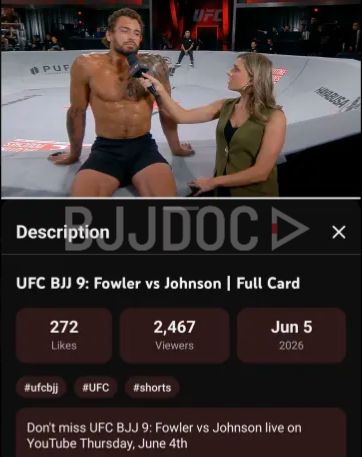
For American based stars such as Nick Rodriguez and Mason Fowler, the picture appears more challenging. Rodriguez faced Joao Nicolite, a matchup that generated limited interest among viewers. Fowler’s opponent, Devhonte Johnson, was viewed as a more competitive booking but the contest still ended in a first round submission.
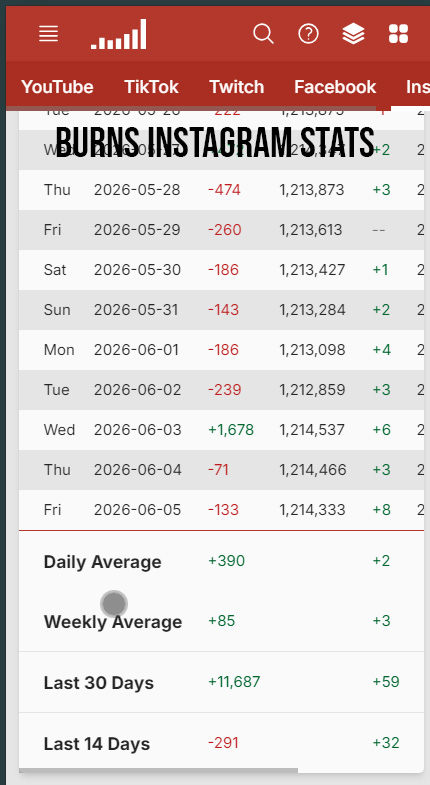
But even if we speculate that there’s a certain Brazilian audience on Paramount, the conversion effect on the athletes social media profiles is fairly low.
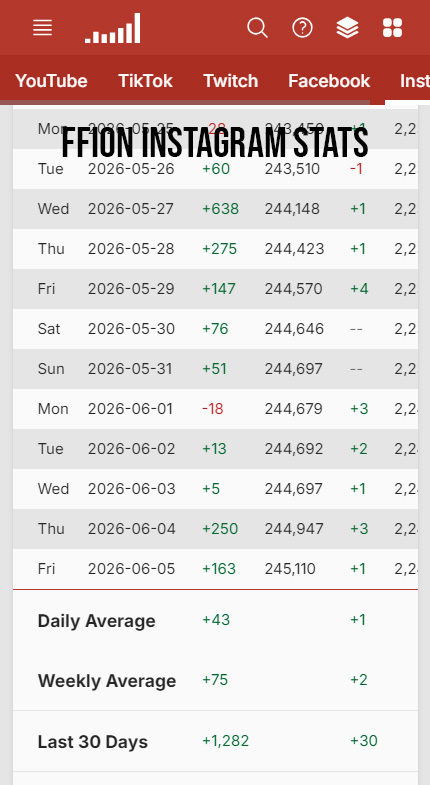
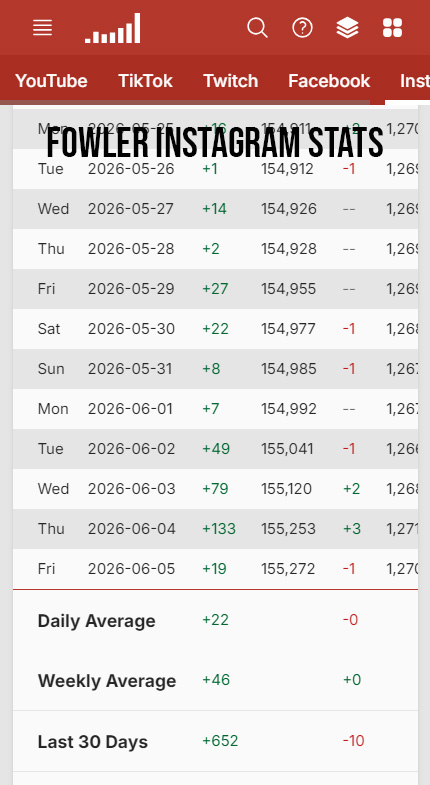
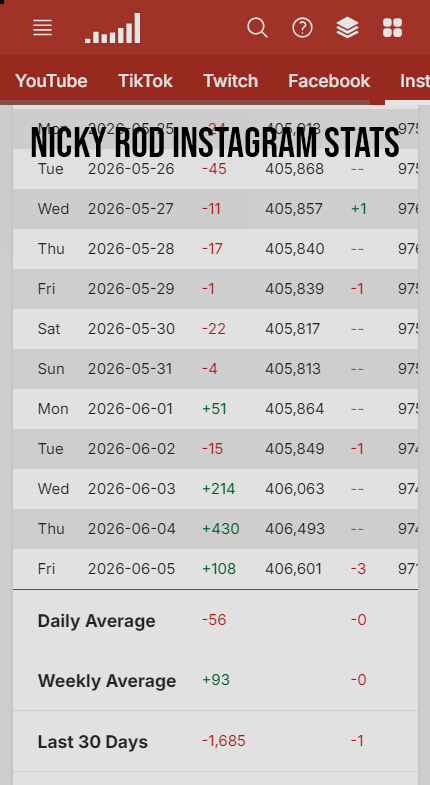
Results:
Mason Fowler def. Devhonte Johnson by submission (RNC), R1, LHW Title
Gilbert Burns def. Horlando Monteiro by submission (RNC), R1
Nick Rodriguez def. Joao Nicolite by submission (RNC), R1
Ffion Davies def. Amanda Bruse by submission (armbar), R1
Bella Mir def. Nichelle Johnson by submission (armbar), R3
Achilles Rocha def. Filipe Pimentel by submission (heel hook), R1
At the post event press conference, UFC BJJ executive Claudia Gadelha was asked directly about live viewership numbers.
“Yeah, I’m definitely seeing the numbers. That’s what we look for. We want to make sure the organization is growing, and we are definitely growing. The Apex is packed now, and our viewership keeps getting better. We are all over the world now — global, Brazil, Canada. And it’s crazy to think that you can see Jiu Jitsu on TV now. I always like to think that most people look at the things they did wrong when they lose. But when you win, you also do a lot of wrong things. So I like to go back and look at what we did wrong even when we win. So we’ll definitely be looking for more improvements.”
She was also asked whether the promotion planned to revive its reality television concept similar to TUF.
“For sure. For sure. That’s the UFC business model. This is how you build brands. That’s how everything started for the UFC. And that was Dana’s ask from day one. I was talking to him last week — he asked us to do a reality TV show, and we built a whole organization for you. That was the beginning of this whole thing, because he definitely knows how to create a brand. So we’ll bring it back. It was just a matter of understanding the style of athletes we need and where we want to go globally. We’re building a new bowl now as well that will launch at the next event, probably ready at the end of July. We are only on event number nine. Everybody’s talking about UFC BJJ and every grappler wants to be here right now.”
On the changes to the competition bowl, Gadelha added:
“The size of the bowl now is 30 by 30. In the beginning, we wanted the bowl to be the size of the UFC’s small octagon, which is 25 by 25. But with the borders, it ended up being bigger. And it’s going to be a little smaller, a little shorter. And you guys will see the rest when we launch.”
Gadelha’s answer regarding viewership focused on positive indicators such as attendance and international expansion. While those metrics are relevant, they do not directly answer whether the American audience is growing. The available data from UFC BJJ 9 seems to indicate that interest is actually going down.
The UFC has historically built stars through storytelling as much as results. Whether that strategy can address concerns regarding matchmaking, commentary and reliance on Brazilian viewership remains uncertain. But they’ve also tried running a reality series called The Ulitmate Surfer. If you’ve never heard of it, that’s for a good reason it’s never produced any viewership or talent.
Nine events into the promotion’s run, many of the same questions remain unanswered.
