

Mateusz Szczecinski is one of the most anticipated Polish competitors heading into ADCC 2026, but even he is not buying the idea that the Tauron Arena Krakow is going to be packed to the rafters come September 12 to 13.
In a recent interview, Mateusz Szczecinski gave a tempered assessment of attendance expectations.
“I’m pretty sure that we won’t be able to fill the whole stadium,” he said. “But if we can get like 10,000 people, bro, it would be amazing.”
That is a meaningful hedge. The Tauron Arena holds nearly 15,000 for sporting events, and Mateusz Szczecinski, a Polish athlete with every reason to be optimistic about a home crowd, is already walking back expectations to two-thirds capacity as the best-case scenario.
He did push back on American skepticism about the venue.
“I think Americans just think that the last few ADCCs were in Las Vegas and they want to keep it there. But in the past, ADCC was traveling around the world. So it’s like they came back to the roots, actually.”
He also pointed to Poland’s growing martial arts footprint, citing Adam Wardzinski, Mateusz Gamrot‘s UFC prominence, and a broader culture of combat sports as reasons the country deserves to host an event of this magnitude.
The goodwill is real, but the sales data tells a harder story.
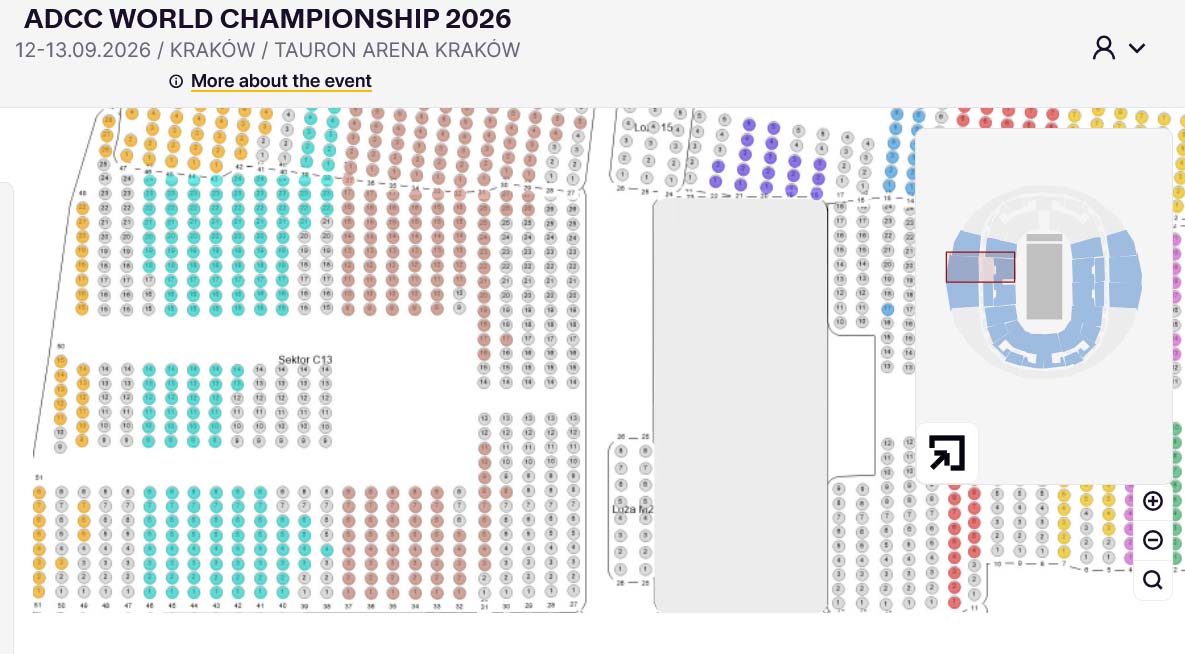
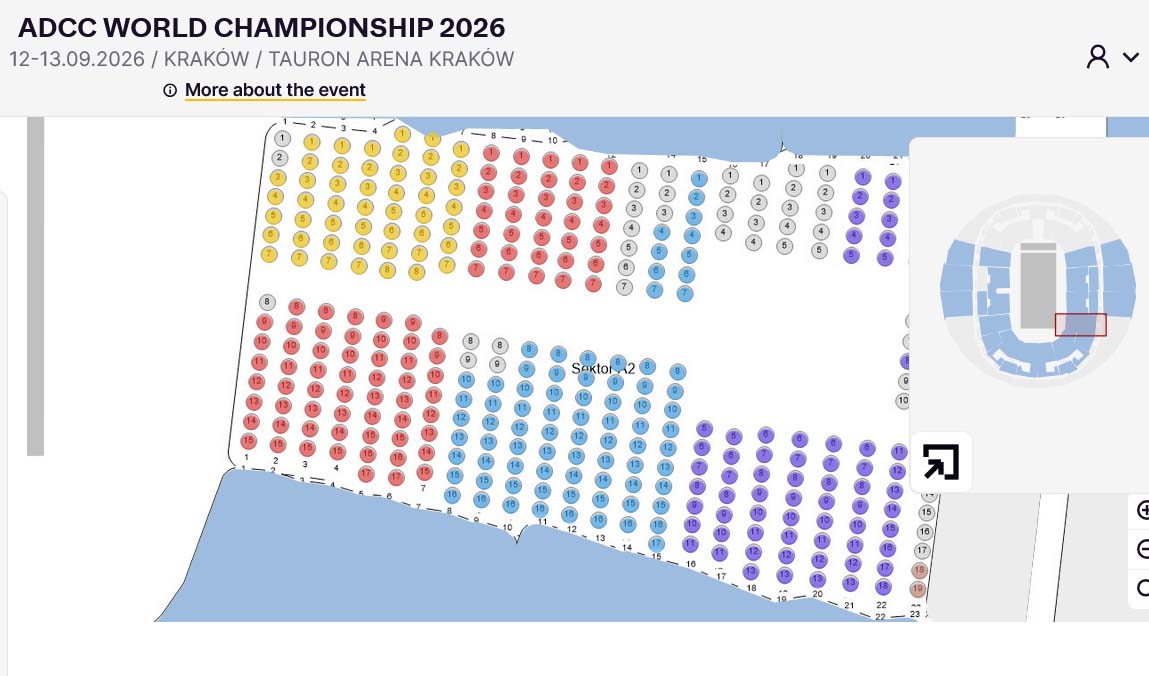
As of June 8, 2026, at Tauron Arena Krakow, total capacity sits at 14,961. Available tickets are 9,149. Sold or withheld tickets are 5,812. Percentage sold is 38.8 percent. Roughly 257 tickets have moved in the past 19 days, consistent with the approximately 80 per day pace tracked earlier. As of early May, sales were averaging roughly four tickets per day over a 34 day window with over 9,000 seats still available at that point. The pace has since improved, but with the event roughly 96 days out, the math remains daunting. At the current rate, a sellout is essentially impossible, and even Mateusz Szczecinski‘s 10,000 attendance threshold would require a significant acceleration in sales.
The sector breakdown shows modest movement across the board, with C13 and C14 leading small gains, but nothing suggesting a surge in demand.
The communication issues surrounding ADCC 2026 have been a persistent concern. The organization’s social media presence has focused heavily on its Open events rather than the World Championship itself, leaving no central hub of information for fans trying to follow the buildup.
That problem has not been fixed. ADCC Poland is not meaningfully using official channels to push the event. Instead, the bulk of promotional reach is coming through FloGrappling, a platform that is constantly posting about other promotions. When FloGrappling is your primary promotional vehicle, your content is buried under other events and announcements on a near daily basis. That is not a strategy for building event specific buzz.

ADCC 2022 and 2024 promoter Mo Jassim was subtly criticzed by the current promoters so it’s not a big surprise he’s not in a rush to help them promote.
The result is a promotion that feels passive at a moment when it needs to be loud.
Compounding the marketing problem is a decision that directly undercuts fan engagement: the ADCC Poland organizers have kept the official invites list private. This has left no central source of information, forcing followers to rely on fragmented updates.
This is a self inflicted wound. The competitor list is one of the biggest drivers of ticket interest at an ADCC. Fans buy tickets to see specific athletes. Without clarity on who is competing, there is no urgency to purchase. The organizers have doubled down on keeping this information private, which makes it difficult to generate the kind of matchup discourse that historically drives interest. The absence of key names like elite stars who usually anchor attention leaves organizers without a narrative backbone.
The pricing reality also matters. Single day passes start at around 54 dollars for distant seats, while two day packages in mid range sections run 172 to 226 dollars, with premium matside seats reaching nearly 972 dollars. Those prices are steep by Polish economic standards, and community reaction reflected that early. Critics compared ADCC ticket costs unfavorably to European football matches, with at least one fan noting the organization would “face a wake up call when they get closer to the date with few tickets sold.”
That wake up call is arriving.
There is something quietly telling about Mateusz Szczecinski‘s framing. He is a Polish athlete, 31 years old, describing himself as physically and mentally in the best shape of his life, openly hoping to make history on home soil. His enthusiasm for the event is genuine, and yet even he is not predicting a sold out arena. He is hoping for 10,000.
That gap between what a homegrown star hopes for and what would constitute a sellout is where the ADCC Poland promotional machine needs to close ground. With roughly three months to go, the pace of sales needs to roughly triple to approach even modest targets.
