
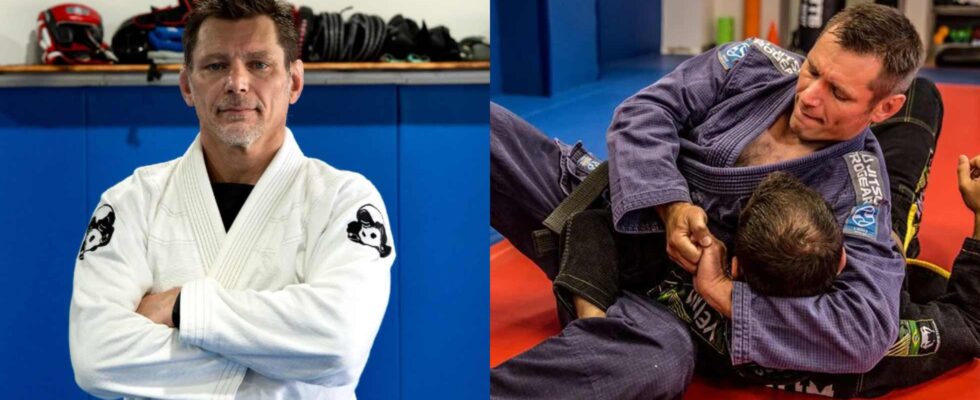
For a decorated sambo and grappling competitor, the path to a judo black belt looked nothing like the traditional route. There were no tournaments, no belt exams, and no gradual climb through the ranks. Instead, years of elite-level sambo experience earned him recognition in judo almost immediately.
“My first judo certificate was second degree black belt,” he recalled. “Gratuitous, just simply based on my sambo skills.”
The certificate came from Greg Humphreys, an OG sambist, who later awarded him a third-degree black belt as well. In his view, the reasoning was simple: the technical overlap between sambo and judo is so extensive that mastery in one naturally translates to the other.
“Some large percent of whatever I can do in sambo could be performed in judo,” he explained. “Virtually just memorize the names, and a four-point throw became an ippon throw, and that was the difference to me.”
That foundation was built through years of relentless training that began in the third grade at a specialized sports school in Russia. He trained six days a week, with four of those days consisting of two two-hour sessions.
On top of the mat work, his coach who was a world and national champion, required athletes to complete 200 push-ups, 100 pull-ups, and running every day.
Looking back, he credits those years for shaping not just his athletic ability, but his mindset.
“He instilled tons of great habits,” he said. “I still to this day sometimes realize how much he imparted on us.”
The training environment was intentionally unforgiving. Under the Soviet system, coaches were compensated based on their athletes’ results, which meant they invested most of their attention in the most disciplined and coachable competitors.
The culture even had a name for it: Kuznitsa Chempionov, which means the Blacksmithery of Champions. His first taste of competition, however, was anything but dominant.
“My first competition, I was spun all over,” he recalled. “I did not know if I was coming or going. I got my as handed to me on a plate.”
His second tournament ended with a cracked rib, but by his third or fourth event, something clicked. He began landing a raskrutka, a takedown similar to uki otoshi, and started throwing opponents consistently.
“After that, things got much better,” he said. “I virtually stopped losing.”
His skill level often surprised experienced judokas who assumed he had climbed through the traditional belt system.
“They would ask me what rank in judo I was after seeing my skills,” he said, “and I’m like, I’m not ranked in judo.”
The response was usually the same. “No, you have to be at least black belt.”
Despite holding high rank in judo, he has always viewed himself primarily as a sambo practitioner.
“I identify as a sambo guy,” he said. “I do judo by default.”
Reflecting on finally receiving a black belt, he said the recognition was gratifying, but never unexpected.
“You still feel achievement, you still feel happy that you did this,” he continued. “But the surprise element is not there.”
