
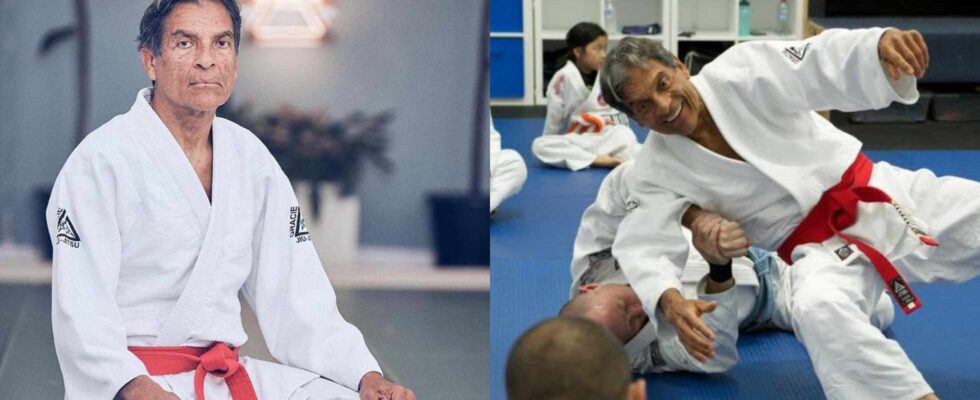
Brazilian jiu-jitsu has grown from a closely guarded family art into one of the most widely practiced martial disciplines on earth. Rorion Gracie, the man who carried it from Brazil to the United States and helped introduce it to the world through the early UFC events, is proud of that growth. He is also worried about what it has produced.
Speaking on The Ageless Warrior Lab podcast, Rorion identified the rapid expansion of BJJ schools as a double-edged development. His concern was not with how many people are training. It was with who is standing at the front of the room.
“Everybody should learn jujitsu,” he said. “But not everybody can teach jujitsu.”
Rorion described a pattern he has watched repeat itself as the art spread globally. A student enters a school, earns a white belt, works through blue and purple, eventually reaches black belt, and then opens a school of their own.
The problem, as he sees it, is that earning a black belt and learning how to teach are two entirely separate things, and the latter is rarely taught at all.
“That guy had never been taught the methodology on how to teach. He just came rough, sparring into the ranks, he just became a black belt and now he thinks he can teach jujitsu. Just because he’s a black belt, that doesn’t make him a teacher.”
He put it plainly: “Unfortunately, this huge expansion has opened this huge can of worms. Now, everybody’s teaching it, but nobody’s really knowing how to teach right.”
Rorion draws a sharp line between being skilled at a discipline and being able to pass that skill along. He pointed to elite athletes across all sports who were brilliant competitors but struggled to coach others, and said BJJ is no different.
A black belt who succeeded largely because of natural athleticism or an instinct for the game may have no framework for teaching someone who does not share those qualities.
His own approach to teaching was shaped by watching his father, Helio Gracie, on the mat for years. What he took from those observations was a philosophy centered entirely on the student.
“There’s no such a thing as a bad student,” he said. “There are good teachers and bad teachers.”
In his view, the responsibility for whether a student learns belongs entirely to the instructor. If the student fails to grasp a technique, that failure traces back to how the technique was presented.
Rorion is currently developing a course specifically aimed at teaching instructors how to teach. He described it as something that could benefit not only those running schools but also students who want to understand what a well-run class should look like, so they can recognize and seek out quality instruction.
