
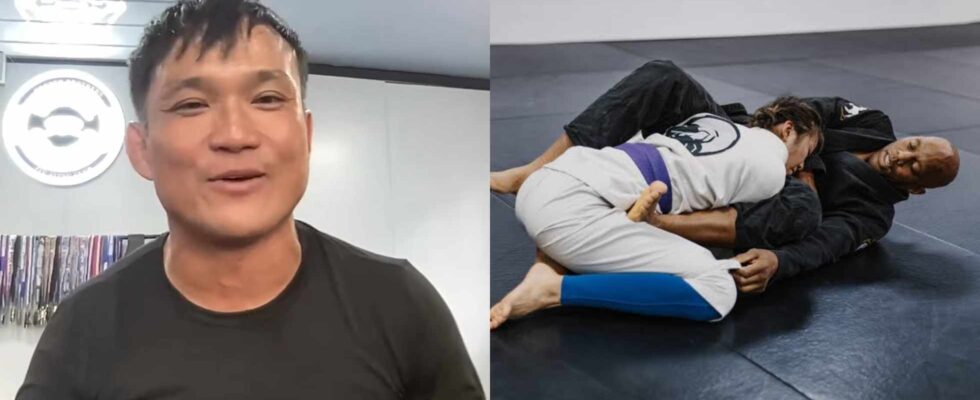
Before becoming a first-degree black belt and leading Underground Jiu-Jitsu in Hawaii, Thang Nguyen was preparing for a very different chapter of his life. Speaking on the Small Man Jiu-Jitsu podcast, Nguyen explained that he and his twin brother, Tuan, already knew they would serve time in prison. That knowledge pushed them to seek out martial arts.
Their friend encouraged them to train, warning them that learning self-defense could be useful inside. In 2009, the brothers began training at Combat 50, an MMA club that offered kickboxing and Brazilian jiu-jitsu. Nguyen initially viewed jiu-jitsu as preparation, but the art quickly became something more meaningful.
“I knew we was going to go to prison,” Yen said. “In case things go bad in prison, at least we know something.”
By the time he entered prison, Nguyen had reached blue belt. He discovered that many inmates practiced informal grappling, often relying on strength and intensity rather than structured technique. When one of the toughest people on his block asked to train with him, Nguyen was able to use his jiu-jitsu knowledge effectively.
The result changed his experience behind bars. Other inmates became interested in training with him, and some began calling him “Bruce Lee.” Nguyen said that learning jiu-jitsu before his sentence made his time inside easier and gave him a constructive way to spend his days.
“Honestly, learning jiu-jitsu before I went into prison made my prison time a lot easier,” he explained. “Now I got people wanting to learn and literally I was only a blue belt.”
Nguyen spent two years in prison. After returning home, he resumed training and began competing regularly. The competitive side of jiu-jitsu gave him another source of motivation, and he continued progressing through the ranks. He eventually earned his black belt under the coach who had guided him from the beginning.
His path also influenced the creation of Underground Jiu-Jitsu. During the COVID-19 restrictions, Nguyen built a small training area above their tire shop because they wanted to keep practicing. What began as a private space for a few training partners gradually grew into a community gym.
Today, Nguyen teaches adults and children, competes, and encourages newcomers to begin regardless of age or experience.
