
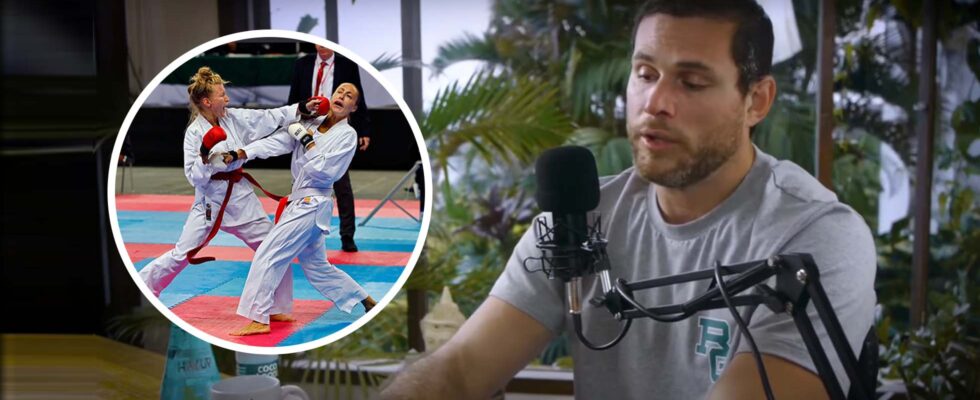
Roger Gracie has expressed serious concerns about the potential inclusion of Jiu-Jitsu in the Olympic Games, warning that the martial art could lose its core the same way Karate did when it transitioned to Olympic competition.
In a recent interview on Pura Connection, Gracie drew parallels between Jiu-Jitsu’s current trajectory and what happened to Karate after its Olympic inclusion.
“I think that when [Karate] went to the Olympics, the sport sank as a martial art,”
“Because it doesn’t become wrestling anymore it becomes a sport.”
The multiple-time world champion’s main concern is how Olympic commercialization could fundamentally alter Jiu-Jitsu’s core essence.
“When it comes to competition all the rules are made to attract an audience right? It’s not the essence of the match anymore,”
he explained. Gracie fears Olympic inclusion would force Jiu-Jitsu to
“lose the essence of the match”
and become something developed purely for
“the commercial side.”
Gracie acknowledged the tension between maintaining martial arts authenticity and competitive evolution. While praising organizations like the IBJJF for trying to preserve Jiu-Jitsu’s core, he recognizes that all competitive formats must balance entertainment value with martial arts principles.
“The Olympics are commercial right? It’s what they can sell more to please the public,”
Gracie noted, highlighting how commercial pressure could compromise the art’s core. He pointed out how rule changes meant to attract spectators often distance the sport from its original role as a real-world self-defense system.
The discussion reflects broader concerns within the Jiu-Jitsu community about the art’s direction. While competition has raised technical standards and global appeal, traditionalists worry about losing its roots in personal defense and actual effectiveness.
Gracie‘s concern isn’t just nostalgia. He argues that when martial arts prioritize entertainment over real-world use they risk becoming hollow. The Olympic format’s focus on quick visual moves might favor flash over the methodical strategy Jiu-Jitsu is known for.
Despite these concerns Gracie believes current major organizations are doing their best to preserve the art’s essence while evolving. His warning about Olympic inclusion stands as a reminder to the Jiu-Jitsu community about the delicate line between growth and authenticity in martial arts.
