
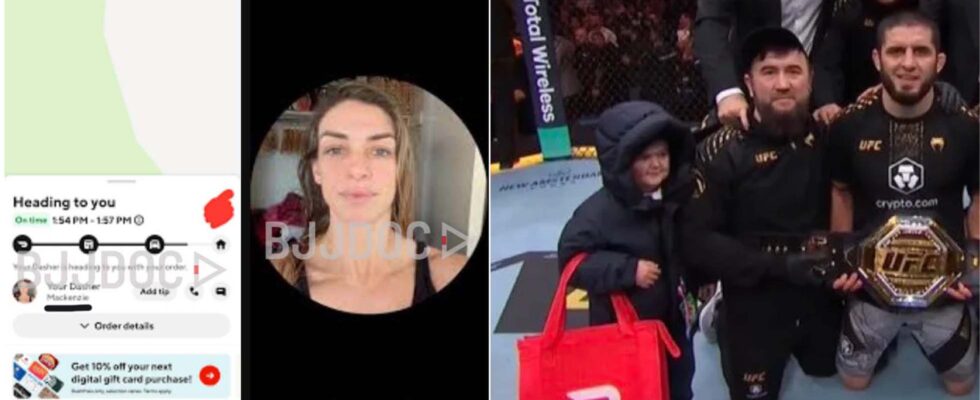
“This isn’t a troll post… this actually happened today.”


The customer insisted they were “100% sure it was her” after the Brazilian jiu-jitsu athlete appeared at their door. The claim seemed surprising, particularly given that Dern had reportedly earned $200,000 for her UFC 298 appearance against Amanda Ribas earlier in the year and boasts 1.6 million Instagram followers—a social media presence that could theoretically command significant sponsorship opportunities.
The original post raised concerns about what this might mean for MMA stars broadly:
“I don’t want to put anything negative out there, but I do think if she’s doing it for money, there should be awareness that a #6 ranked UFC fighter isn’t being paid enough.”
Then something interesting happened. The post vanished in less than two hours.
Fast forward to November, and the picture suddenly becomes much clearer. DoorDash announced a major partnership with TKO, becoming the official on-demand delivery partner for both UFC and WWE. The deal includes event sponsorships, original content featuring top athletes, and customized fan experiences across both organizations.
Dern herself appeared in promotional material for the partnership, speaking directly to camera about why the collaboration made sense.
“Hey guys, so being an athlete, a mom, and someone who grew up on the mats my whole life, I have no time to waste. So when DoorDash told me that they’re going to be partnering up with the UFC, I was like, yes, finally someone that gets the grind. So I’m super excited and happy to announce that DoorDash is now the official on-demand delivery partner of UFC.”
Looking back, the May incident now appears less like a troubling sign of inadequate MMA star pay and more like an unconventional marketing campaign testing the waters months before an official announcement. The deletion of the original post—which happened as discussions about UFC compensation intensified—takes on new significance in this context.
DoorDash representatives emphasized the partnership’s focus on connection.
“At DoorDash, we’re all about connecting people to what they love — whether that’s their favorite meal, moment, or match. And together with TKO, we’ll create new ways for fans to experience the thrill of live sports and entertainment.”
This wasn’t the only breadcrumb. At UFC 322, social media personality Hasbulla Magomedov entered the cage carrying a DoorDash bag after his friend Islam Makhachev won the welterweight title. At the time, fans assumed it was simply another stunt from the popular figure. In retrospect, it appears to have been another piece of guerrilla marketing building toward the formal partnership announcement.
Sana Shuaib, Senior Vice President of Partnership Marketing & Digital at TKO Global Partnerships, outlined the scope of the collaboration:
“Our partnership will deliver first-of-its-kind integrations, content, and experiences, and unlock even more opportunities connecting families to the exciting entertainment of WWE and fight fans to the world of UFC.”
The episode raises questions about modern marketing tactics. What began as apparent evidence of systemic underpayment in professional sports now looks like creative advertising that relied on generating organic controversy and conversation.
Whether fans view this as clever marketing or a cynical manipulation of legitimate concerns about MMA star compensation likely depends on their perspective.
