
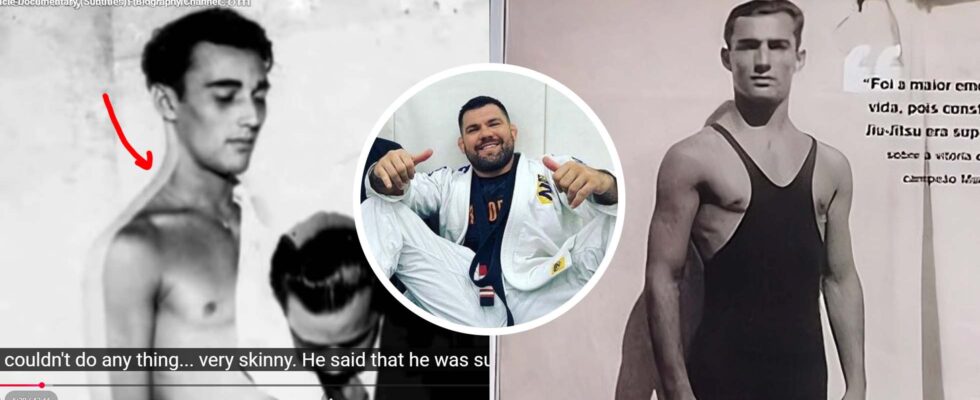
In a recent ConnectCast debate with Pedro Valente, ADCC champion and jiu-jitsu historian Robert Drysdale raised controversial accusations regarding the manipulation of Helio Gracie’s image in promotional material. The American Brazilian black belt presented what he described as photographic evidence of digital alteration intended to make the legendary founder appear physically smaller than he actually was.
During the extended debate, Drysdale displayed a photograph he said was taken from a documentary published on the Valente Brothers YouTube channel.
“This photo was edited with Photoshop to give the impression that Helio Gracie is thinner than he is. You can see he’s even strong, but as they edited the photo, they put a transparent background on his back and on his triceps, to give the impression that he is thinner than he is.”
The fifth degree black belt argued that such alterations are unnecessary and undermine the authenticity of jiu-jitsu history.
“This story is fantastic, guys. The people don’t need Photoshop, they don’t need anything, this story is fantastic, you don’t need to lie or exaggerate anything.”
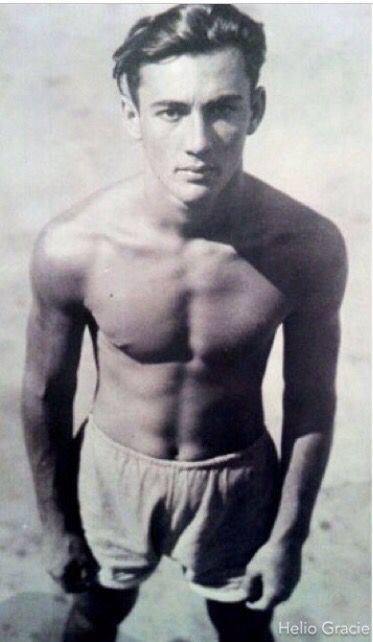
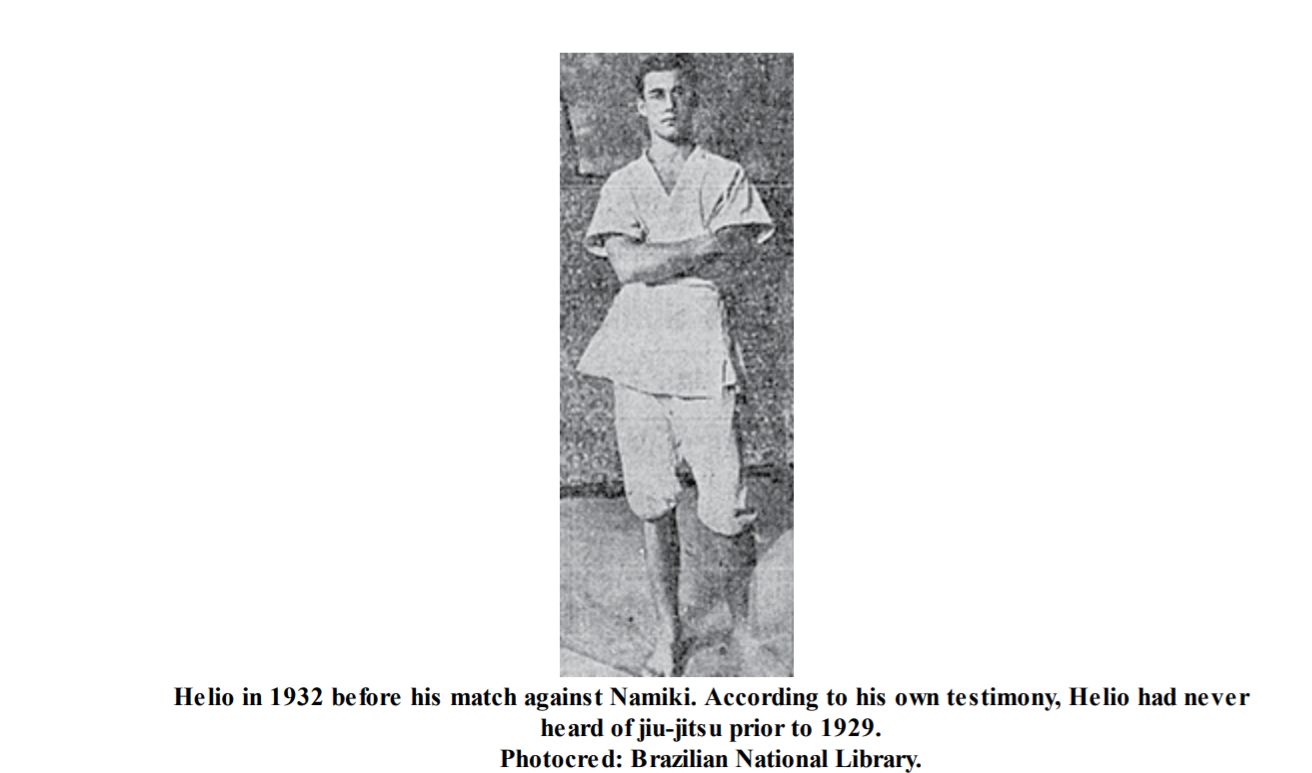
Drysdale’s criticism extended beyond a single photograph. He also challenged the long standing narrative that Helio Gracie was physically weak, presenting historical records that point to Helio’s athletic background. Referencing newspaper reports from 1929, Drysdale noted that Helio competed in swimming events at the Botafogo club in Rio de Janeiro, where he finished second in a 100 meter breaststroke competition.
“Helio was second swimming in Botafogo, an elite club in Rio de Janeiro. I competed in swimming once in my life. I was last in the competition.”
The exchange highlighted a deeper disagreement over how Brazilian jiu-jitsu history should be preserved and communicated. Drysdale framed his position as prioritizing documented evidence over allegiance to specific narratives or personalities.
Rickson Gracie’s book describes his father Helio as:
“My father was far from the best athlete in the family. When he was a child, a doctor told him not to exercise because of his vertigo. My dad used to say, “I was born weak, I’ll die weak. I pass for strong because of Jiu Jitsu.” Because Hélio did not have the option of using power, he had to rely on leverage, sensitivity, and timing to compensate for his lack of strength.”
Meanwhile Drysdale’s own book has a mocking take on Helio writing:
“Helio Gracie was the size of a hobbit, but he could beat Kodokan black-belts, luta livre champions, and giants too—often at the same time. He’d armbar one of them, get a rear naked on a second, and wrist-lock the third. He also single-handedly created jiu-jitsu and was able to fly. If he were alive today, he’d hold the belt in every weight class in the UFC, would create peace in the Middle East, and could cure cancer.” – writes Danielle Bolelli, PhD in his preface to Drysdale’s The Rise and Evolution of Brazilian Jiu-Jitsu
There are some indicators that Helio might’ve suffered from asthma. A book on Maeda writes:
“At the dojo, they watched with great interest. Koma was especially impressed with Hélio, the smallest of the brothers. He was about six or eight at the time and had been living with some aunts in Rio. He was a thin, asthmatic boy whose powers of observation were extraordinary: his shining dark eyes sparkled with intelligence. Koma saw that he seldom blinked. It was as though he was looking through camera lenses recording for future use every detail of what he saw.”
“I admire your loyalty to Master Helio, but I put that truth and justice must always overcome loyalty. Truth and justice are above loyalty.” – Drysdale added.
Pedro Valente, who trained directly under Helio Gracie and runs the Valente Brothers academy in Miami, defended the traditional accounts while acknowledging that early promoters sometimes embellished stories to market the art.
“Many times the history of Jiu-Jitsu was told to promote art, and there was no need for academic rigor, it was another era.”
He maintained, however, that Helio’s childhood health issues were genuine and supported by medical documentation from that period.
The debate reflected a broader tension within the Brazilian jiu-jitsu community between honoring foundational figures and reassessing history through primary sources and archival research.
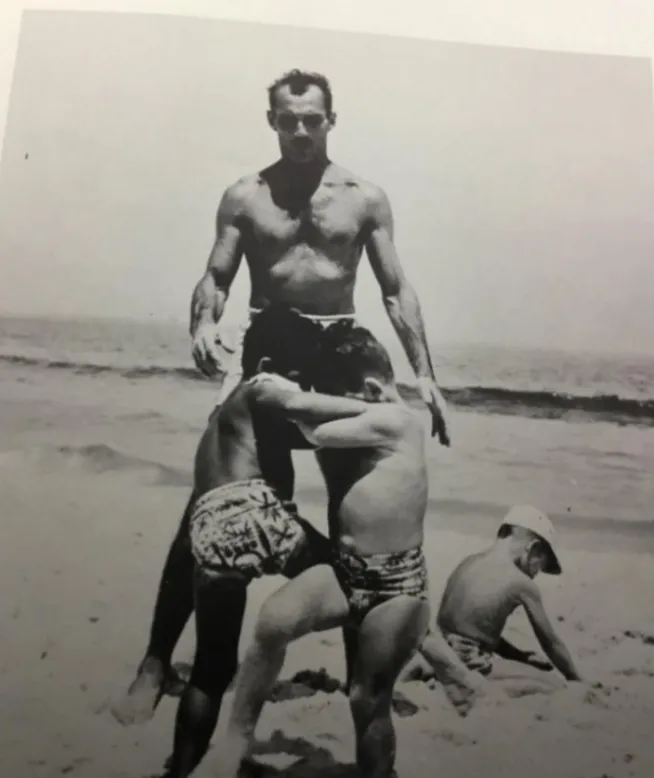
The Brazilian Biography channel’s documentary is still viewable on Valente brothers channel.
