
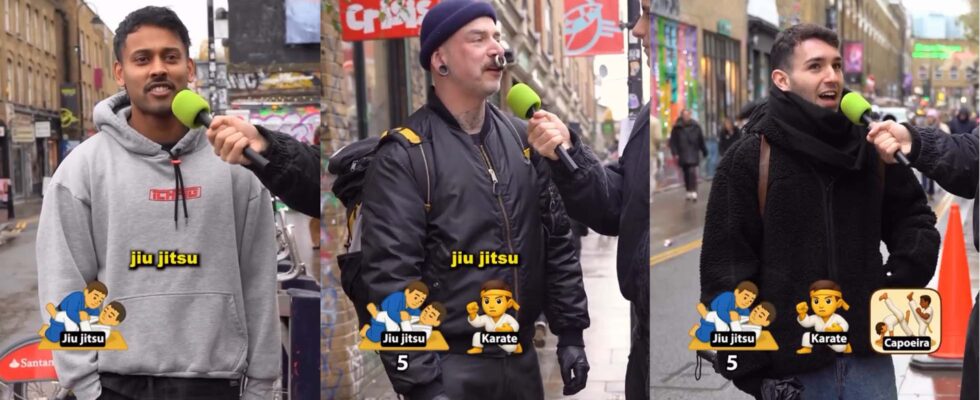
Brazilian Jiu-Jitsu faces an image problem among everyday people who question its practical effectiveness.
A recent informal survey of random individuals revealed a surprising consensus. When asked about the least effective martial art, the majority named BJJ without hesitation.
“Jiu-Jitsu,”
one respondent answered flatly when posed the question.
“Pointless.”
Another person expanded on their skepticism.
“Just taking people to the ground, it’s kind of pointless.”
The perception appears widespread. Multiple respondents independently arrived at the same conclusion, with one explaining their reasoning.
“It’s dancing around. I mean, what’s the point?”
This dismissal stands in contrast to BJJ’s documented effectiveness in competitive combat sports. Since Royce Gracie made a lasting impression on the martial arts world in the early 1990s by overcoming larger opponents using Brazilian Jiu-Jitsu techniques, the discipline has become foundational training for MMA stars worldwide.
Yet the disconnect persists. Some respondents conflated different grappling styles, with one person stating:
“Probably, like, Judo. Yeah, because it’s kind of like, all you gotta do is drop down on the floor and then what?”
Another individual revealed an internal contradiction in their reasoning.
“Everyone be saying Jiu-Jitsu. Why Jiu-Jitsu? Because I feel like most encounters end up on the floor within the first minute.”
When pressed further, the same person added:
“If you’re a good wrestler, then, like, if you’re a wrestler, it’s fine. Jiu-Jitsu is just a little bit like grab and hold and hope for the best.”
Other martial arts were also mentioned, including capoeira, the Brazilian discipline that blends acrobatic movement with combat technique. One respondent described it as:
“a dance slash martial art.”
The responses highlight a persistent gap between public perception and combat sports reality. While practitioners understand the technical depth and effectiveness of ground based grappling systems, casual observers often see them as impractical or overly complicated.
This is likely also due to the fact that UFC de-emphasizes grappling nowadays. Former UFC heavyweight contender Gabriel Gonzaga has made bold claims about the UFC’s stance towards Brazilian Jiu-Jitsu. He concluded by emphasizing that “the real Brazilian jiu-jitsu is not allowed” under current UFC regulations.
“If you take too long grappling with each other, break up, stand up. If you take too long with the cage holding the guy to put him down, break up to the center,” he explained.
This perception likely stems from BJJ’s emphasis on positional control, leverage and submissions rather than striking. To untrained viewers, the slow tactical exchanges of grappling can appear passive when compared to the immediate visual impact of punches and kicks.
The irony is that many martial arts experts argue the opposite conclusion, noting that grappling proficiency provides essential skills striking only practitioners often lack once encounters inevitably move beyond standing range.
