
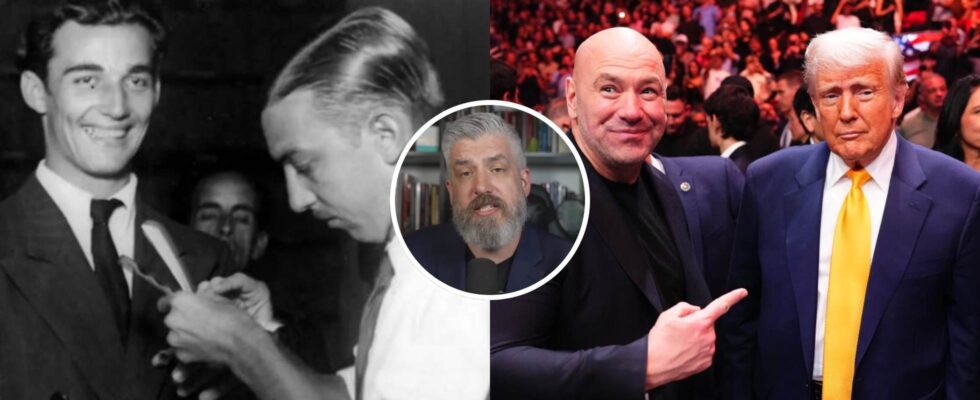
MMA analyst and journalist Luke Thomas recently addressed the political leanings of mixed martial arts in a podcast episode, where he argued that the sport has increasingly taken on a right-wing identity.
“MMA’s become right-wing and the dumbest people you know got the most mad about it for the most anodyne comment. That is quite obviously true. To anybody with half a brain, it is obviously the case,” he said.
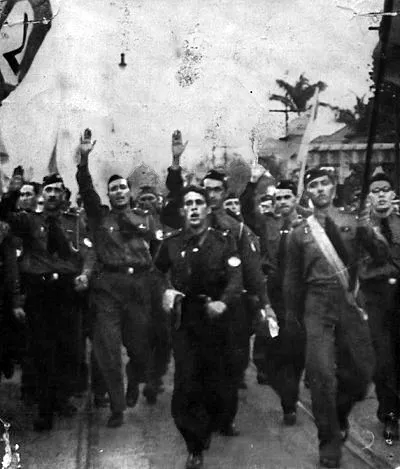
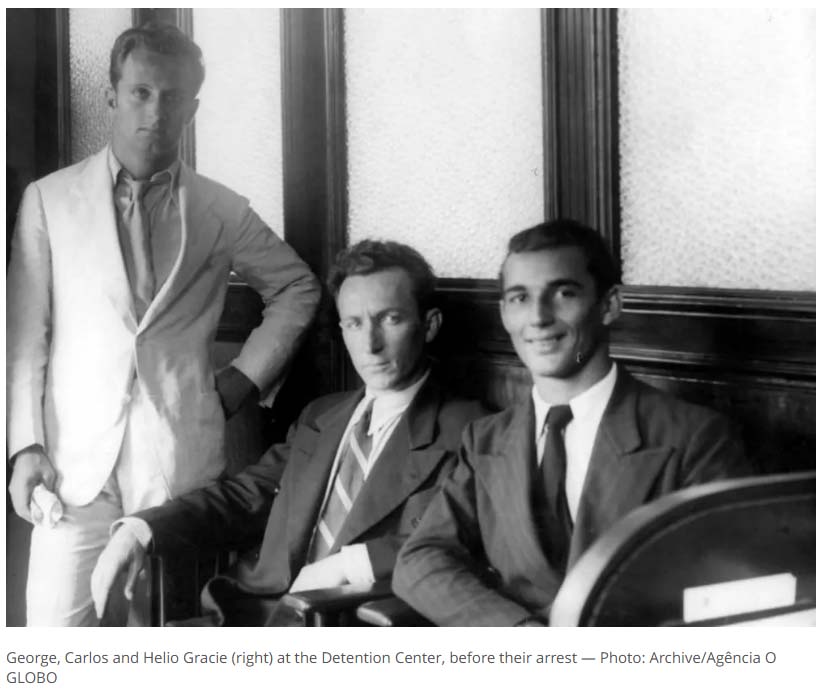
The historical foundation of his argument, Thomas explained, stretches back nearly a century. He pointed specifically to Hélio Gracie, one of the foundational figures of Brazilian jiu-jitsu, and his association with the Integralist movement in 1930s Brazil. That political group, he noted, openly embraced f*scist ideology during that period.”
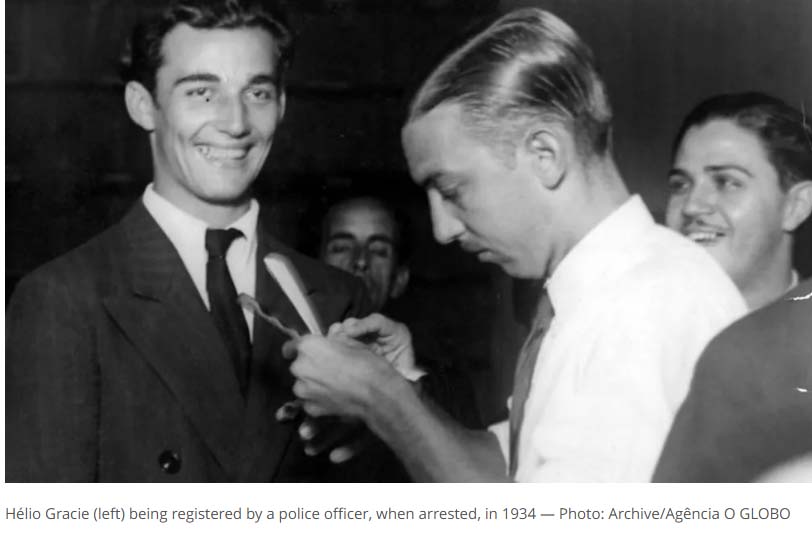
“We’re talking about 1930s Brazil and Helio Gracie being a part of the Integralist movement, which was openly fascist,” Thomas said. “It was not one of those like, ‘Oh, Trump’s a f*scist.’ No, this party was openly fascist and a movement at the time based on European fascism.”
He continued: “They believed that all of society should be basically run by Catholicism, both the laws and the social mores. Everything should basically be like a Catholic movement, but it was openly f*scist in that way. Helio Gracie was part of that.”
From there, Thomas drew a direct line between that historical context and present-day political dynamics in the United States. He argued that combat sports communities, particularly those centered around jiu-jitsu, have created networks that facilitate ideological exchange between political movements in different countries.
“The ways in which the Brazilian political right actually influence the American right and American politics more generally, and I show this in the lecture, is through jiu-jitsu and it’s through MMA and these back channels that it helps create and these other networks that it helps create for political influence,” he said. “It’s literally the conduit both between the North American right and the South American right as well as a way for their electoral gain domestically.”
Thomas also addressed critics who acknowledge that MMA culture may lean politically conservative but question why that trend should be considered significant. For him, the issue is not merely about identifying a political tilt, but about how that influence might be used.
“I care, number one,” Thomas said. “The reason why is because it’s not a question of which way has everything kind of leaned. That would not be an observation that’s necessarily all that interesting or very difficult to make. It’s the second argument from that, which is to what extent do the present actors weaponize or utilize it for political ends.”
He connected that concern directly to the 2024 U.S. presidential election cycle, arguing that the UFC played a meaningful role in shaping public perception of former President Donald Trump following the events of the January 6 United States Capitol attack.
“In the 2024 election, the UFC was one of, if not the most consequential mainstream actor in rehabilitating Donald Trump after January 6,” he said.
