
Robert Drysdale, fifth-degree black belt, ADCC champion, and author of multiple books on Brazilian jiu-jitsu history, made a case for why the IBJJF remains one of the most important forces in jiu-jitsu, whether people want to admit it or not.
The conversation began with a question about professional jiu-jitsu events and what is actually driving growth in the sport. Drysdale did not hesitate.
“These professional events, which one of them is profitable? Not a single one of them.”
His argument was direct: the belief that professional events are responsible for growing jiu-jitsu is, in his words, a myth that has been repeated so often people have started accepting it as fact.
“Jiu-jitsu never needed professional jiu-jitsu to grow… That’s a myth, but it’s a myth. It’s been repeated so much. People go, ‘How are we going to survive unless we have a professional event?’ The way we have this far. And we’ve never had a profitable professional event.”
When asked which organization he credited as the primary force behind jiu-jitsu’s growth, his answer was unambiguous.
“The main force is IBJJF. Hands down. They give order.”
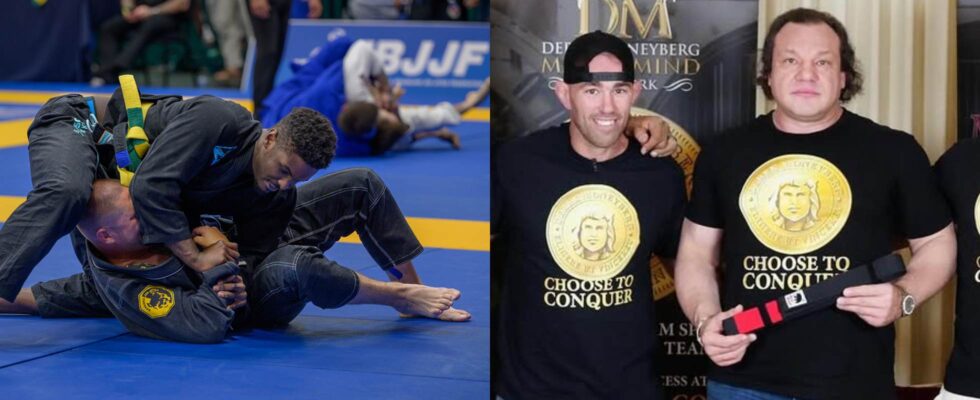
To make the point concrete, he brought up Derek Moneyberg, a figure who had recently drawn widespread criticism after receiving a black belt on an accelerated timeline outside of IBJJF’s framework.
“Is Derek Moneyberg an IBJJF black belt? He’s not. Now, if IBJJF does not exist, that right there is happening every day. We would have 12-year-old black belts if it weren’t for them.”
Drysdale connected this directly to a observation about human behavior when financial incentives enter the picture. Earlier in the conversation, reflecting on the first generation of Brazilian instructors who traveled abroad to teach, he noted how quickly values shift when money becomes the priority.
“Once you put that cash in front of them, people are very quick to change and adjust.”
He acknowledged having differences with the organization, but held firm on the core point.
“I don’t understand. Like, why are people complaining? Complain about what? You don’t have to. You can join an organized organization that actually cares about, I mean, does an outstanding job in my opinion, or you can just join the circus. Okay, you can. But there’s no future in the circus because it’s just not going to last.”
For Drysdale, the argument comes down to what happens when standards disappear entirely. Without a governing body willing to enforce belt requirements and timelines, the rank system becomes whatever any individual instructor decides it should be on a given day, for whatever reasons suit them at the time.
“Take those guys away and see what happens. It turns into a circus even faster.”
