
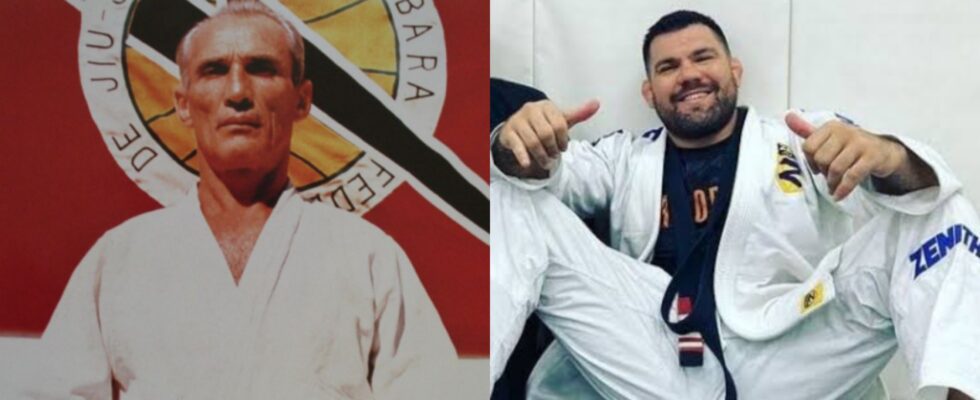
Pedro Valente has seen enough. The Miami-based jiu-jitsu instructor, who trained under Grandmaster Helio Gracie from the age of three until the grandmaster’s passing, is calling out what he describes as a deliberate pattern of historical revisionism fueled by social media incentives.
Speaking on a podcast, Valente drew a direct line between online attention-seeking and the targeted smearing of Helio Gracie’s reputation, invoking an ancient Greek concept to explain the phenomenon.
“There’s a story in ancient Greece. They talk about Herostratus, and he brought down the temple of Artemis in Ephesus. This is about 400 years BC. And he brought down that beautiful temple. And then they asked him, ‘Why did you do it?’ and he confessed that he did it because he wanted to become famous.”
Valente says the same impulse is alive and well in the modern jiu-jitsu community.
“In ancient Greece they call it the Herostratic impulse, which is this impulse that people have to destroy myths for notoriety, and in our generation to gain clicks, clickbait, to be able to get more followers on Instagram, on social media.”
The veteran instructor argues that Helio Gracie’s outsized influence in the martial arts world makes him a prime target.
“Helio Gracie has become bigger than life. He started this movement with his brother Carlos that culminated in one of the biggest sports in the world.”
Valente notes that Gracie’s image now hangs on school walls across Africa, Asia, and even Japan, a fact that moved him to tears when he encountered it during a seminar in Tokyo.
Rather than celebrate that reach, Valente says certain content creators are actively working against it.
“Many times we see people cherry-picking the sources in order to be able to tell a story that they already created before the research.”
He believes the motivation is rarely about historical accuracy.
Valente contrasts this with judo culture, where practitioners study and honor figures like Kanō Jigorō with reverence. In jiu-jitsu, he says, no equivalent ethical foundation exists.
“In jiu-jitsu we didn’t create this culture, which I believe is a moral culture, an ethical culture of respecting your roots.”
He also points to personal resentment as a factor.
“It connects with certain people who have resentment in their hearts and they like this idea of tearing down someone who was successful.”
Valente acknowledges that revisiting history has its place but draws a sharp line between honest inquiry and agenda-driven content.
“Revisionism for its own sake is not positive. Trying to destroy people’s legacies for no reason.”
