

Aaron Pierre spent years chasing raw strength before he decided that longevity mattered more, and that single shift now shapes almost everything about how the 32-year-old British actor trains for his role as John Stewart in HBO’s “Lanterns.”
At 6ft 3in and built with the kind of frame that makes a superhero costume look inevitable rather than aspirational, Pierre has become something of a case study in how to build and, more importantly, sustain an action-ready physique.
The same broad-shouldered look served him well as former Marine Terry Richmond in Netflix’s “Rebel Ridge,” and it’s clear his approach has nothing to do with chasing a single look for a single role.
“At a time [my goal was] being as strong as I could be,” Pierre told Men’s Health. “But now it’s longevity. Just how can I be able to move in the way I want to move for as long as possible?”
That reframing runs through everything else he does in the gym.
“I’m focused on evolution and growing and definitely longevity,” he says. “That’s really how I try to train, in ways that contribute to my shelf date.”
It’s a mindset that treats the physique as a byproduct of a body built to last decades, not months.
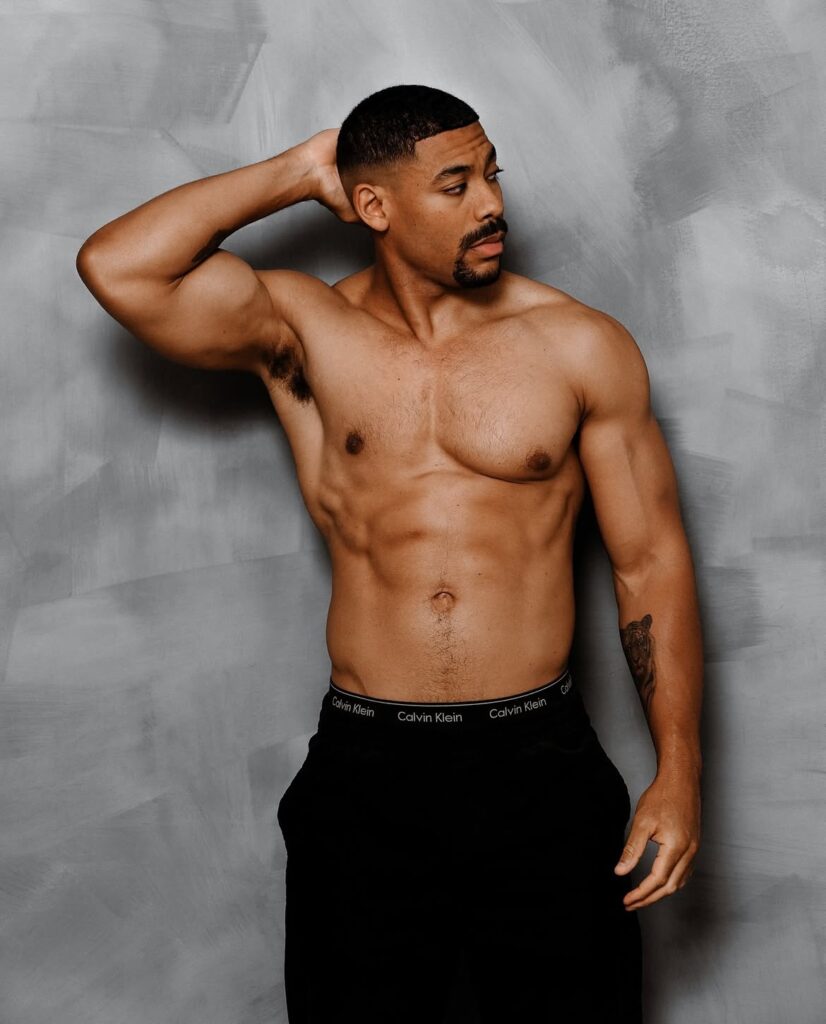
Pierre’s training history has moved through nearly every phase a committed lifter tends to pass through.
“When I first started it was largely compound lifts,” he explains, before he layered in more conventional gym work. Then came a full pivot. “I sort of abandoned the gym entirely and went straight calisthenics exclusively,” he says.
These days he’s settled into a blend of the two, training around four to five times a week and treating heavy lifts and bodyweight work as complementary rather than competing methods.
His favorite exercise is refreshingly unglamorous. It’s the press-up, tackled in sets with brief rests between.
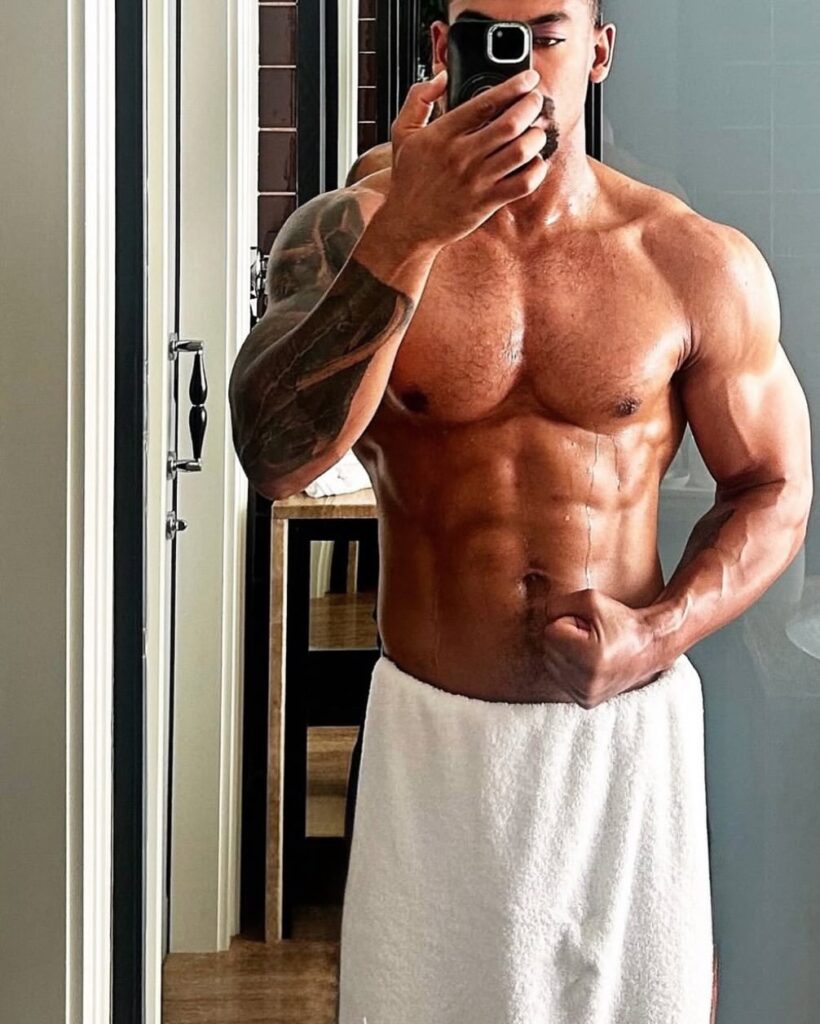
“I think the purpose of that is muscle endurance,” he says,
Pierre says that the payoff extends well beyond stamina, building real strength through the chest and shoulders along the way.
There’s also a quirk in how Pierre approaches the moves that don’t come naturally to him. Rather than sidestepping them, he leans in.
“I have this strange thing where exercises and movements that I’m not very strong at, I become obsessive about,” he says. “Anything that I find challenging, I actually lean into it.”
Dips were once a struggle for him. Now they’re a strength, purely because he refused to let the discomfort of being bad at something keep him away from it.
Strength work is only one piece of the puzzle, though. Outside of role-specific prep, Pierre folds in what he calls “weight training, calisthenics and a considerable amount of martial arts,” with boxing and Brazilian jiu-jitsu forming the backbone of that side of his routine.
He took up boxing in 2016 and started jiu-jitsu in 2019, a pursuit that paid off with a gold medal at his first tournament in 2023.
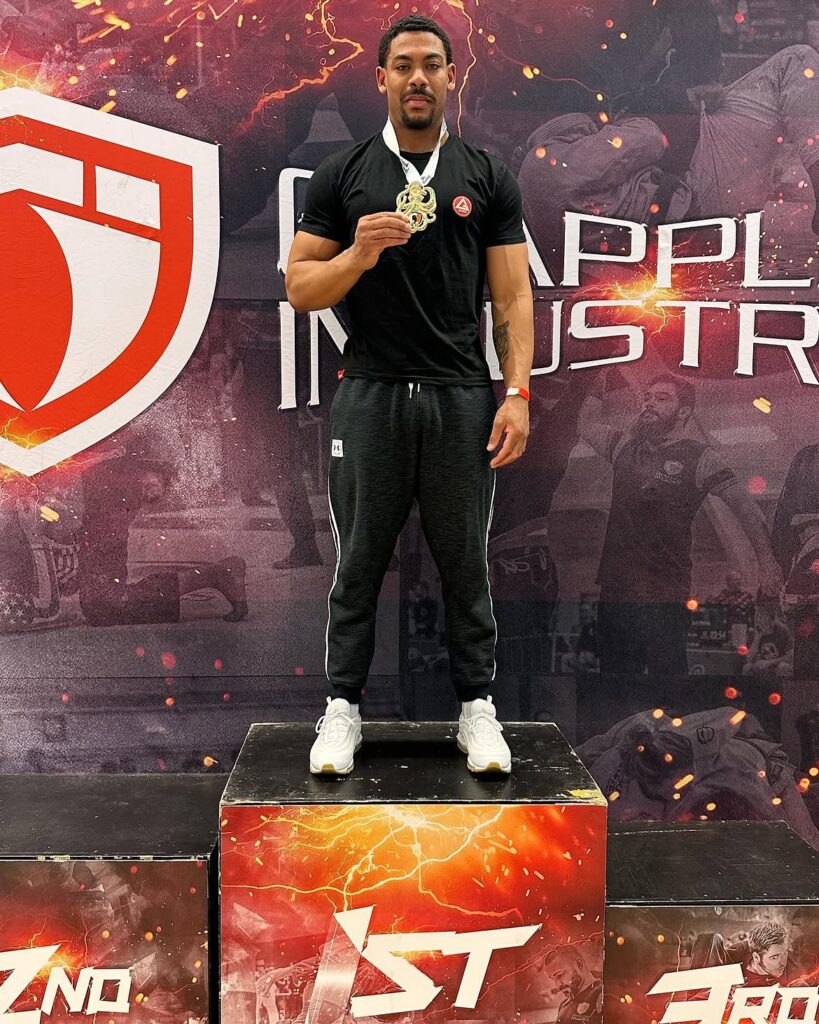
When his schedule allows, he tries to get on the mats or in the ring four times a week, though he’s careful not to stack that work with heavy strength sessions too often, noting it’s “a lot on the body.”
What martial arts gives him goes beyond conditioning.
“It is the most humbling thing in the world,” he says. “I love being a student. I love being a sponge… putting myself in situations where I have to evolve and I have to grow.”
For Pierre, the mat is as much a mental exercise as a physical one, a place where ego gets checked and growth becomes the entire point.
Consistency, more than intensity, is the real engine behind his physique. Pierre doesn’t wait to feel motivated before showing up.
“No matter what my schedule is, no matter what time zone I’m in, frankly no matter how many hours of sleep I’ve had, I make sure I get it in,” he says.
It’s not a call to push through exhaustion or injury, since his whole framework is built around longevity rather than burnout, but it does reflect a simple truth that showing up on the unglamorous days is what actually compounds over time.
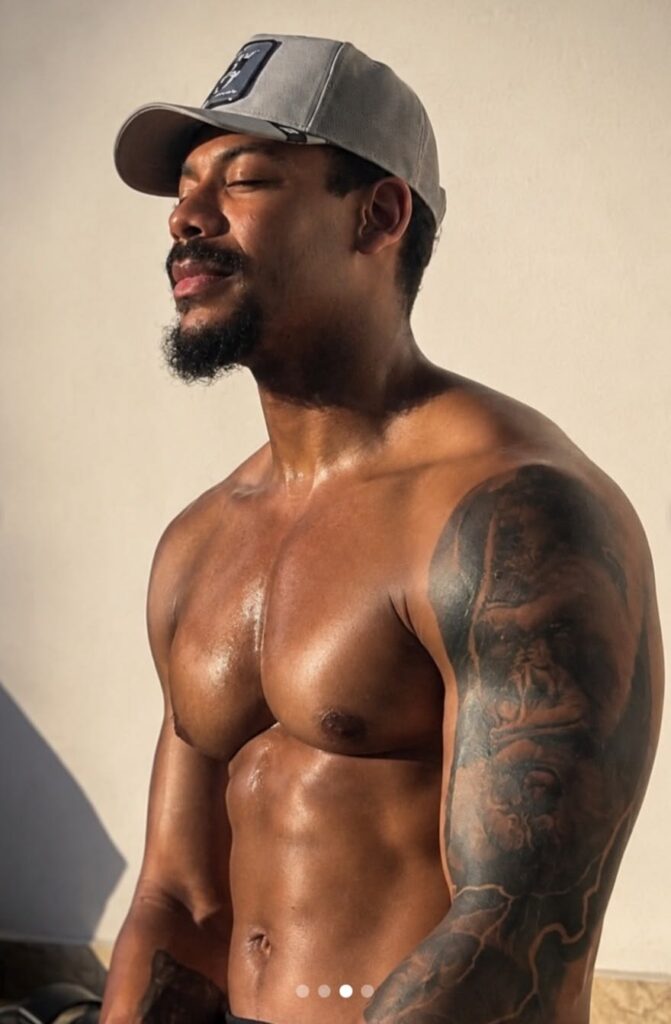
Of everything Pierre discusses, it may be his approach to mental wellbeing that carries the most weight for him personally.
“Mental health and spiritual wellbeing are equally, if not more, important,” he says. “I really prioritise meditation. I really prioritise communicating what I’m experiencing with my loved ones and people who I trust.”
That perspective was shaped by a harder chapter in his life, a stretch when he was unemployed, in debt and unsure whether his pursuit of acting was determination or self-deception. During that time, he kept his struggles to himself, not wanting to place his burdens on the people around him. His outlook has since shifted considerably.
“Learning that you don’t need to put everything on your back, I learned that later than most,” he says. “What is fundamentally human is that we share the load. We alleviate each other’s burdens; we guide each other through storms.”
