
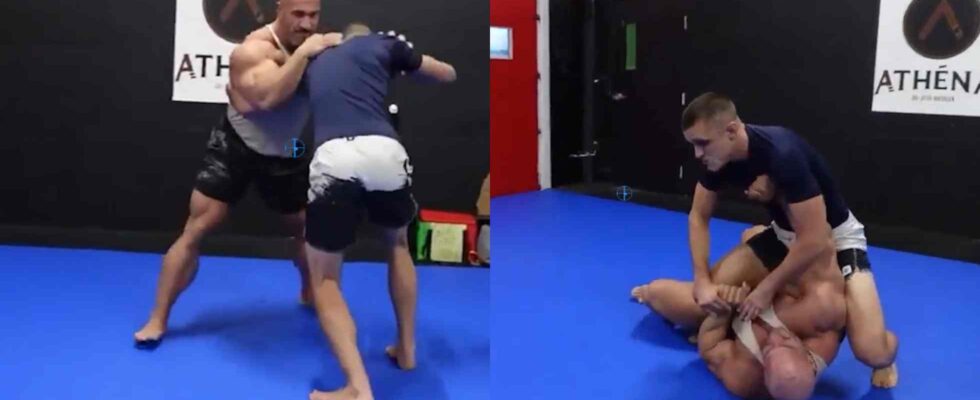
Can a smaller, trained individual overcome a significantly larger, untrained opponent? The answer, as revealed through various grappling match videos, showcases the fascinating interplay between size, strength, and technique.
A common scenario involves a large, untrained bodybuilder facing off against a much smaller BJJ practitioner. On the surface, the size and strength disparity appears insurmountable. However, the outcomes frequently defy initial expectations. These matches reveal how technique can effectively mitigate a massive size and strength disadvantage, especially when the fight moves to the ground.
In controlled grappling situations, the BJJ practitioner often secures victory through superior technique. While an untrained opponent might rely on sheer strength or attempts to overpower, the trained grappler uses leverage, positioning, and submission holds to neutralize their advantage. The untrained individual’s lack of technical knowledge typically becomes their downfall, leading to inevitable defeat once the engagement reaches the ground.
However, translating these dynamics to a real-world scenario presents a different picture. In an unrestricted setting, where striking and slams are permitted, the larger opponent’s physicality becomes a more significant factor. The bodybuilder, free to use punches and other aggressive maneuvers, could pose a more substantial threat. The smaller, trained individual would need to adapt their tactics, emphasizing evasive maneuvers and precision to avoid taking damage.
Despite these considerations, the principle remains: technique offers a critical edge. Videos of such matches serve a vital educational purpose. They demonstrate that, even against a formidable size and strength disparity, a well-trained grappler can effectively control and submit a larger opponent. This understanding is crucial for anyone learning self-defense, underscoring the importance of skill over brute force.
Critics argue that these videos don’t accurately represent real life due to their lack of striking and slamming. Yet, the lessons they impart about the effectiveness of technique in grappling contexts are invaluable. They highlight how grapplers can adapt to various situations, using their skills to turn potential disadvantages into victories.
